Events
Leave a reply
Spring at last!
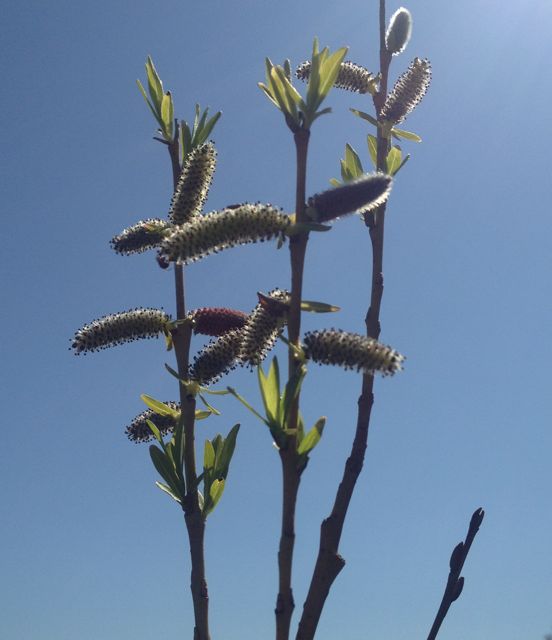
Willow
Finally spring has sprung and the garden is growing at full gallop. The joy of the new buds and unfurling leaves is so welcome this year after our remarkably long winter.
Our precious little Ginkgo biloba and the surrounding hedges of Hawthorn and Elder have come into leaf, the apple trees are covered in blossom and the herb circle is coming alive as the plants push through the surface of the nicely warmed soil.
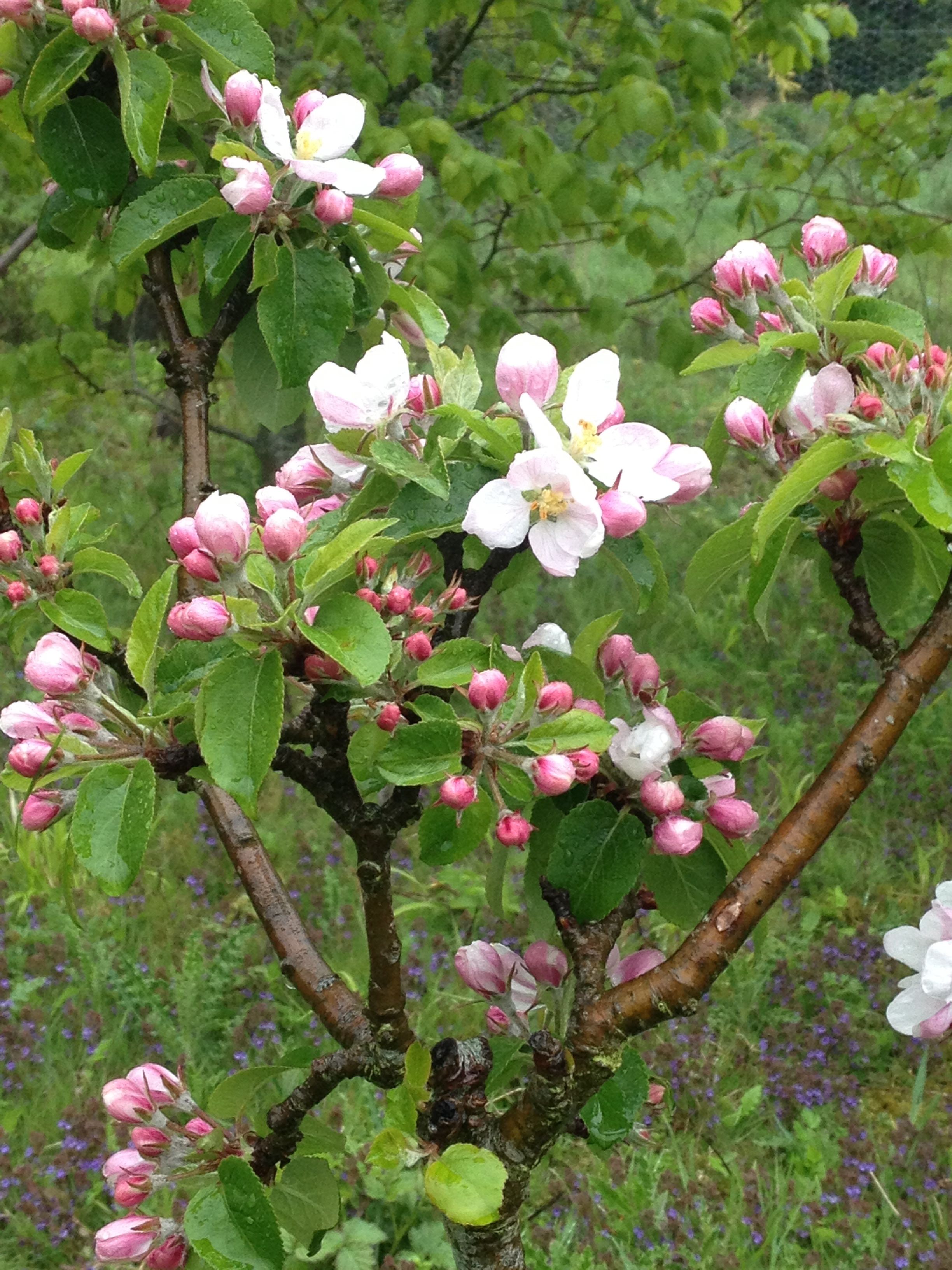
Apple blossom
The garden is teaming with bees enjoying the ground ivy (Glechoma hederacea) as it gathers pace in its apparent quest to cover the garden and pink deadnettle (Lamium purpureum), which is popping up in all the free space in the herb beds. Since early March these two seem to have been the main source of food for the bees.
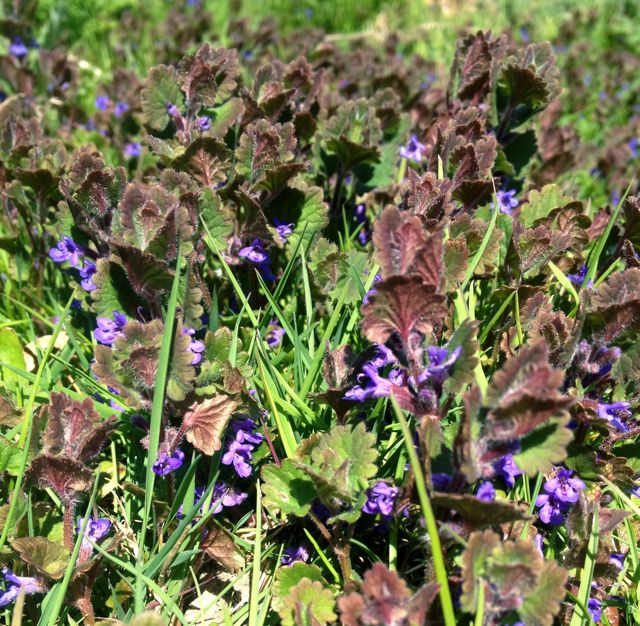
Ground ivy
The rapid rate of growth over the last month has been astonishing to observe. Some plants such as Angelica archangelica and Comfrey (Symphytum officinale) appear to doubling in size every few days. Common Figwort (Scrophularia nodosa), which wasps adore in the summer, is useful, pretty and prolific. The imported dandelions are doing well and happily I have found the first shoot of Licorice (Glycyrrhiza glabra) suggesting that it has made it through the cold winter on the South Downs.
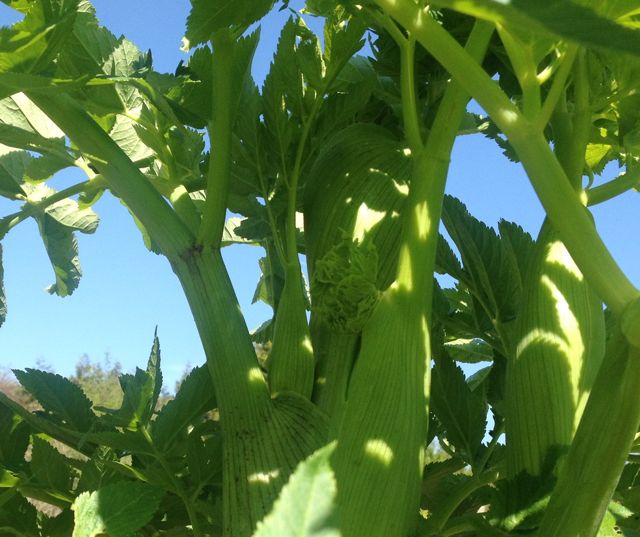
Angelica
I have planted beds of Calendula, Borage, Sunflowers and a few Milk thistle seeds from last year’s crops that have germinated and produced shoots within a matter of days this month. It is wonderful to see and to start to recognise the distinguishing features of even the tiniest shoots as they appear.
I am noticing that some seeds though, are taking a couple of years to germinate.
For example, a nursery bed I fully expected to be full of self-seeded Sunflowers this year from last year’s crop is instead full of tiny Poppies (Papavar somniferum) self-seeded from a lone beautiful poppy that had appeared in the lawn between the beds in 2011 and amongst them there are a handful of St John’s Wort (Hypericum perforatum) plantlets that were sown from bought seed also in 2011.
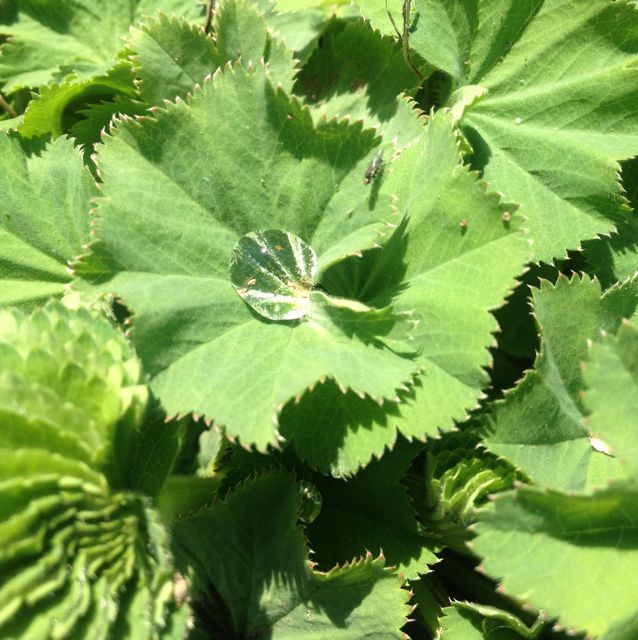
Ladies mantle with morning dew
The pond, which was dug this time last year, is absolutely teaming with life. I am delighted to report that the resident frog, which was rescued from a bunker in Brighton last April, is still with us and now we have a full complement of newts, water boatmen and hundreds of tadpoles. It is however getting covered with green algae, which I have been told may be in part due to the fact that it doesn’t have much shade and that a solution to this is to introduce straw to the pond as the algae is drawn to and clings to it. Any tips on this gratefully received. For the moment though I have elected to leave it as it is, as the algae appears to be providing very good shelter, hiding opportunities and possibly food for the otherwise vulnerable tadpoles.
During April we have created a new garden bordering the chalky bank. We are planning to populate it with indigenous wildflowers with the help of a local expert in this field, from Stanmer nurseries. I am very excited to see this garden come into being and hope to provide photos shortly.
My favourite herb of the month has to be Cleavers (Galium aparine). We have been drinking gallons of Cleavers tea fresh from the garden over the last few weeks. I think it has a lovely delicate taste.
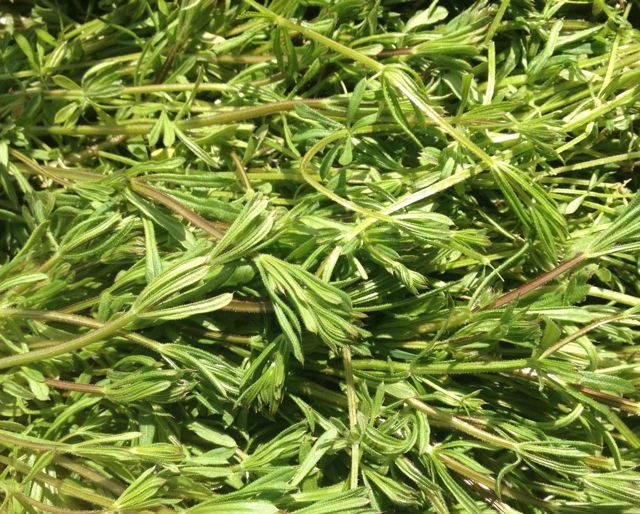
Cleavers
This is nothing new for the herbalist’s amongst you, but if you haven’t tried them before now is a good time to gather the young shoots for juicing or popping into salads before they become too fibrous and stringy.
They have wonderful health benefits and are commonly used as a spring tonic to cleanse the lymphatic system after winter.
February and March at the Physic Garden Project
From winter to spring?
February was a quiet and gentle time in the garden.
Chie (my most intrepid and regular volunteer and assistant) and I have cleared and prepared the nursery beds ready for this year’s seeds.
We have also worked our way round the herb circle, clearing the dead remnants of last year’s plants, weeded out the new bramble, useful but rather prolific ground ivy and red dead nettle.

Chie in a snow flurry
Even with the bitterly cold weather and amongst the snow flurries there are signs of new life in the herb circle. I was surprised to find tiny little self-seeded Thymes and happy to see the very first very dark pink marshmallow shoots appearing in the respiratory bed.
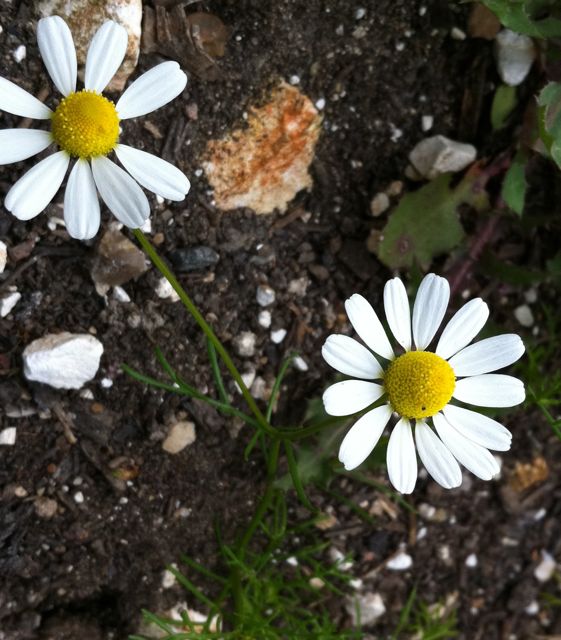
Hardy little Chamomiles
The German Chamomile plants have proved to be very hardy, grown from seed last year and having defiantly returned after the rabbit onslaught, they have been popping up all over the sleep bed right through the winter.
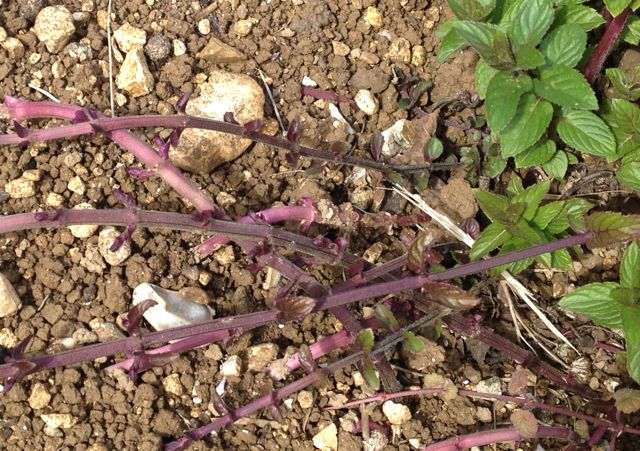
I might regret not isolating the chocolate mint (Mentha piperita cultivar) an indulgent buy! It is sending runners out at a rapid rate of knots and may start to dominate the digestive bed, but for now it’s great to see its vigorous lust for life at work. Another mint, the notorious Penny Royal (Mentha puleium), is spreading like a carpet and packed with essential oil pulegone, a gentle stroke releases the most stimulating (but toxic) aroma.
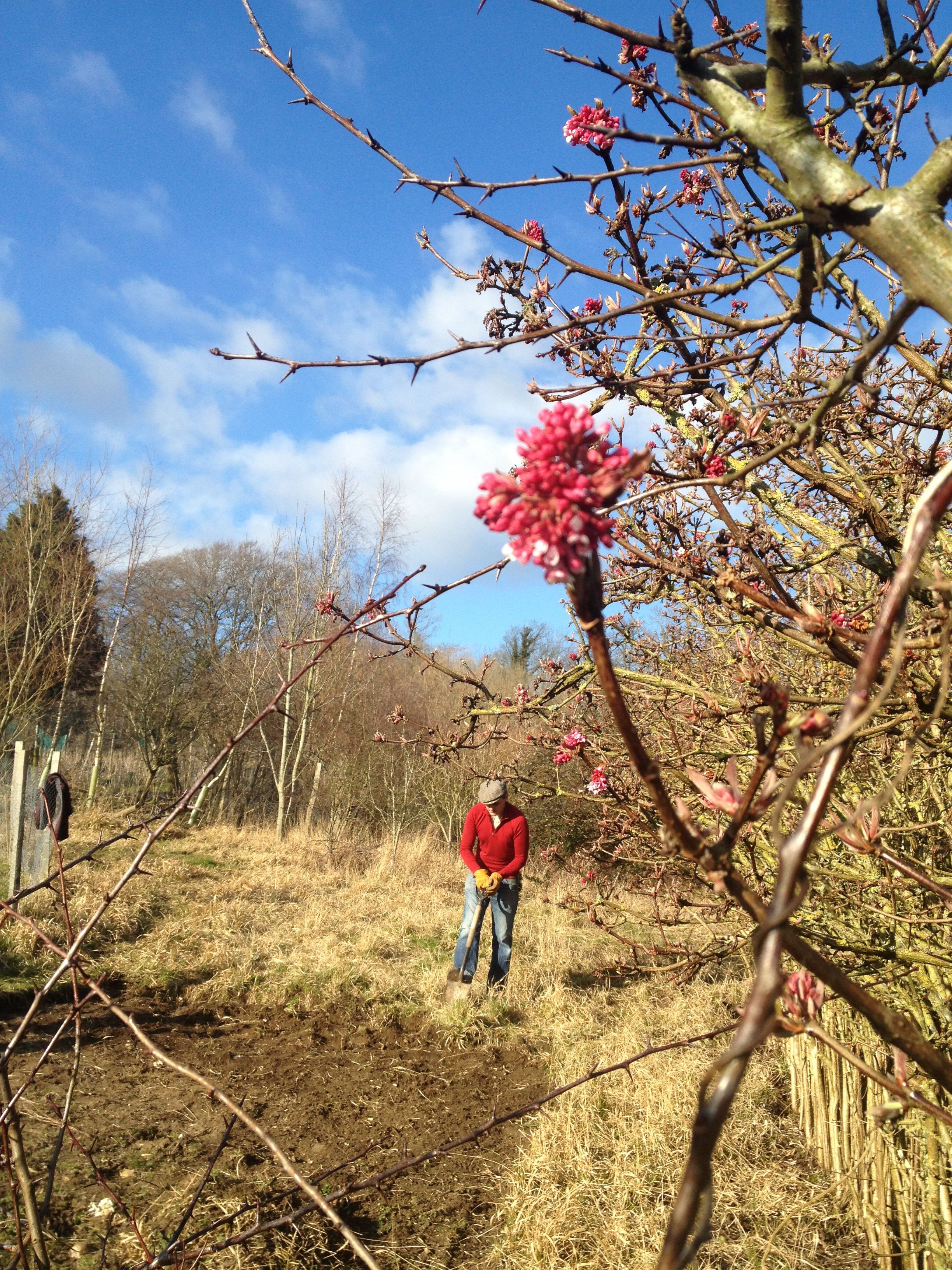
We dug our new vegetable plot on one of the tantalisingly sparse spring days, nestling it next to a lovely winter-through-spring flowering prunus hedge line. It is covered with black mypex in an attempt to raise the temperature of the earth in preparation for seed sowing.
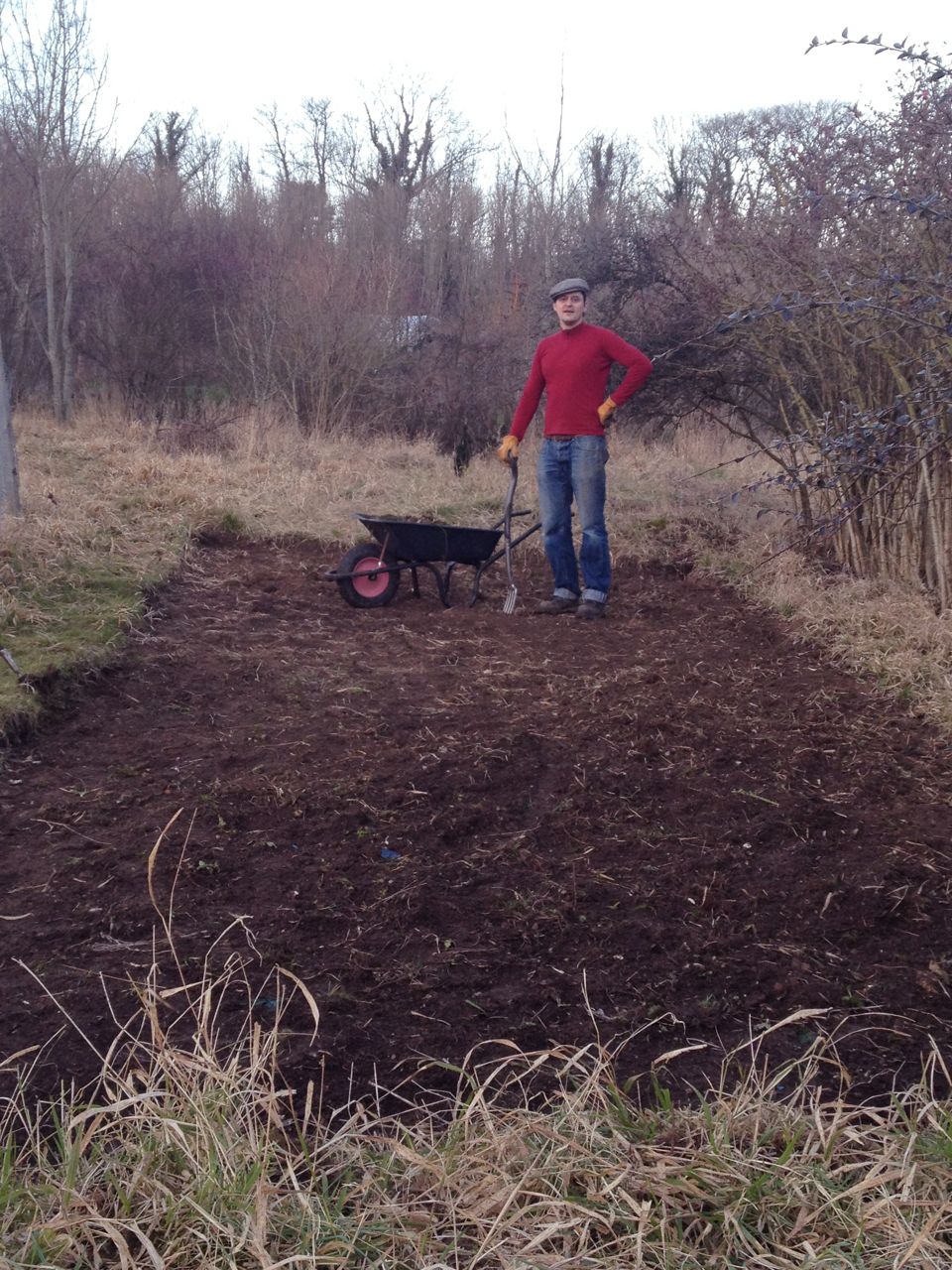
Bax has nearly finished the new veg patch
We are now in March and there have been no real signs of the temperature rising! Apparently this is the coldest March in 50 years. It certainly has felt pretty chilly.
We have taken advantage of the slow start to Spring by digging up a whole row of young organic Goji berry plants, kindly donated by neighbouring project Village fruits, whilst they are still dormant. They are to become our brand new medicinal hedge and provide a windbreak for the herb circle.
We also received a wonderful Demascena rose from my friend and mentor, Sarah Fury, which is now springing to life and whose blooms should provide us with the most intoxicating heady perfume this summer!
More herbs are breaking the surface, and this week we were delighted to discover the garlic we planted in January standing in rows like a little protective army in the heart and circulatory bed.
Although a little later than in the wild, it would appear that the Ramsons bought as bulbs last year are just peaking through the soil and as promised, we won’t be disappointed with the purchase!
Chie and I had a little field trip, seeking out Silver birch trees to tap for their sap.
We used the traditional herbal method of drilling a small hole in the tree and feeding in a straw to collect the sap in a tied on plastic bottle. We have since discovered a rather more tree friendly method using just a knife. To see a video of this method in practise please follow this link: . http://www.naturalbushcraft.co.uk/wild-food/tapping-the-birch-tree-for-sap-in-march-collecting-birch-sap-a-clean-sugar-rich-water.html
The sap is rising now, perhaps a little later than usual due to the cold weather so there is still time to try this wonderfully therapeutic spring tonic for your self. It is very important, should you be new to this and fancy trying this for the first time to follow some simple guidelines including correctly identifying a silver birch, remembering to return for the sap and not leaving the tap running and then to re-seal the hole you have made once you have finished.
 Physic Garden Project