Short and sweet tales from the garden: Nov 2012

November at the Physic Garden Project

 Beech hedge bat tunnel
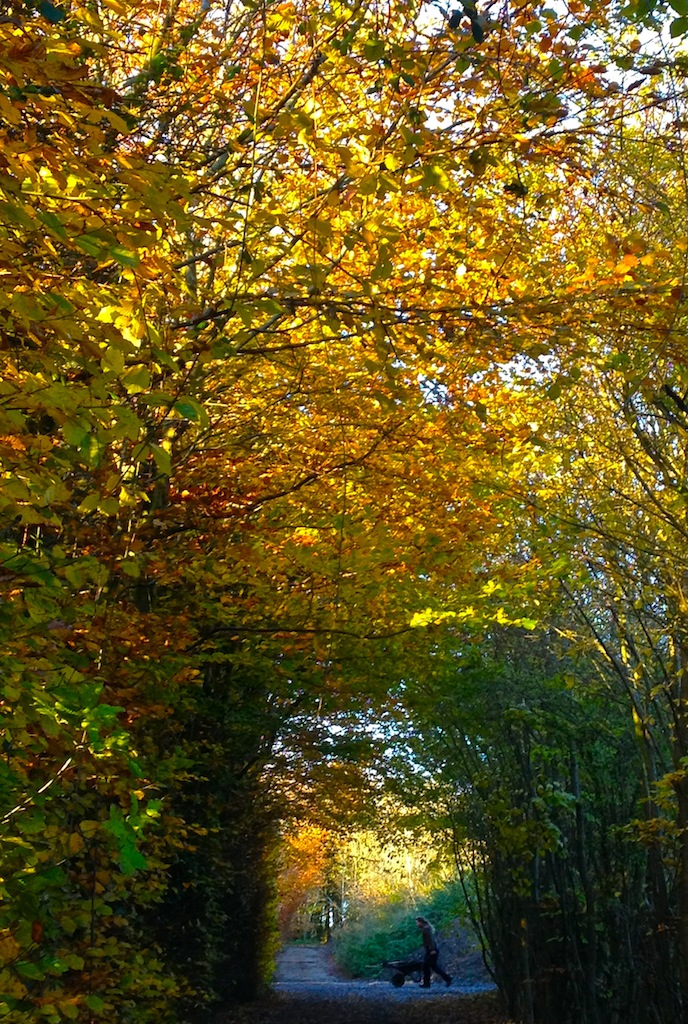
beech hedge bat tunnel


In between the rainy days we have had some glorious sunshine this month, which have been perfect for walking in the great wood opposite the garden and taking stock as the garden growth slows to a walking pace.

The autumn colours, as the leaves turn with the sun casting its low yellow light, are joyous bringing with them an acceptance, that the summer such as it was, is long gone.

We have harvested the odd trug of herbs in November, gathered and piled up the fallen leaves and enjoyed the luxury of doing very little in the garden!

With our presence dropping off, the deer seem to be moving in.

We recently spotted a nicely flattened bed of grass next to the fruit beds and twice disturbed a dozing roe deer on our arrival, which promptly vanished in seconds into the undergrowth.

Most of the herbs are at least showing signs of dying back now after their remarkable recovery from rabbit damage.  Exceptionally Verbascum thaspus (mullein) rosettes are still popping up and looking super fantastic now, often super soft with dew.

Inevitably the herbs used in my practice this month have included a steady supply of Echinacea purpurea. I favour 1:2 liquid extract for its reassuring tingle on the tongue as it prompts our innate immunity to come out and protect us.

Various formulas centred around homemade Sambuccus nigra (elderberry) tincture, (which is so delicious that it can, and has been, be drunk like wine!), Thymus vulgaris (thyme), Achillea millifolium (yarrow), Mentha piperita (peppermint), Eupatorium perfoliatum  (boneset) and Inula helenium  (elecampagne) have been in demand as we adjust to the changing of the season and bugs abound.

Autumn harvest
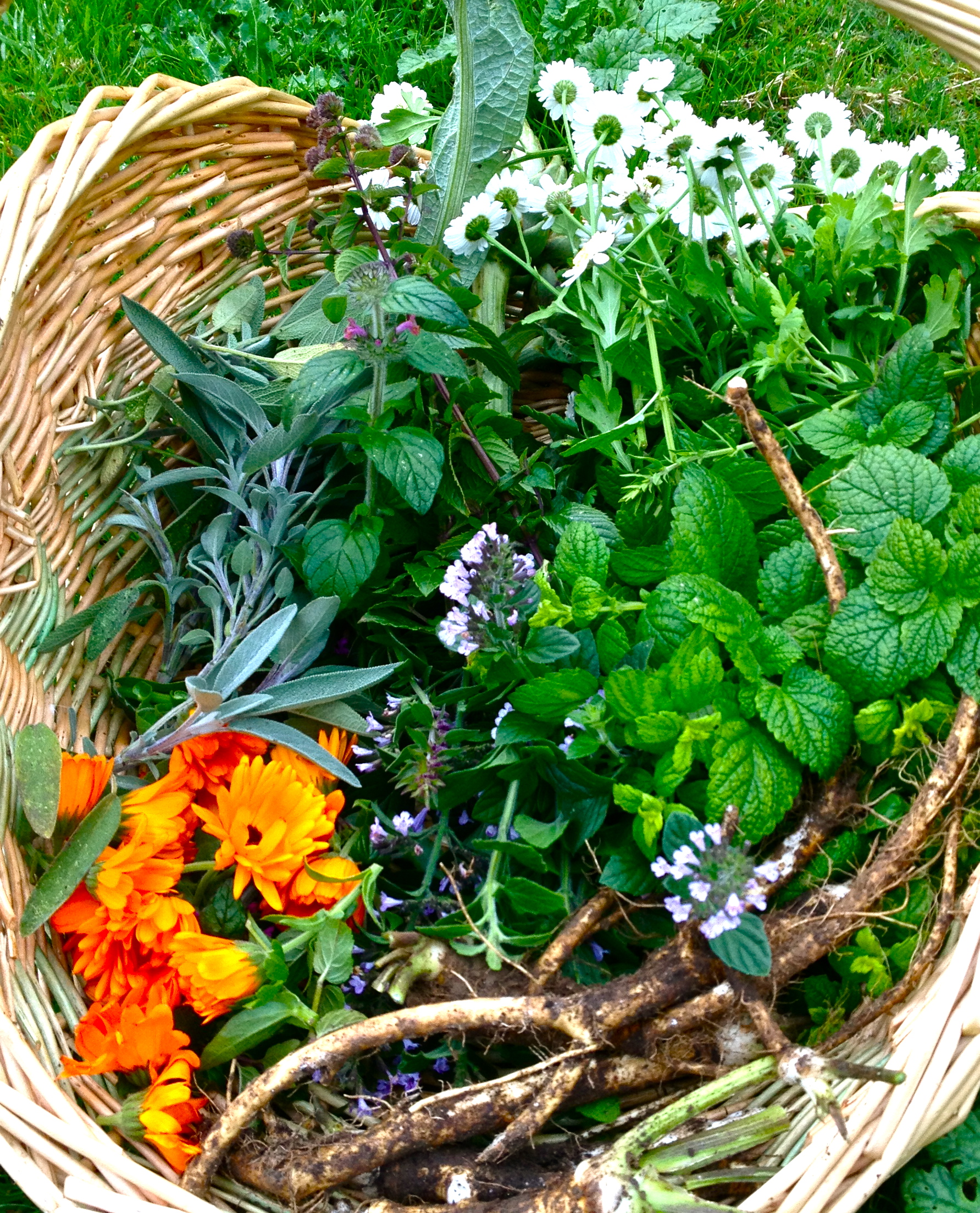
Autumn harvest

Sept/Oct 12

Sept/Oct 2012:

Sunny days in September

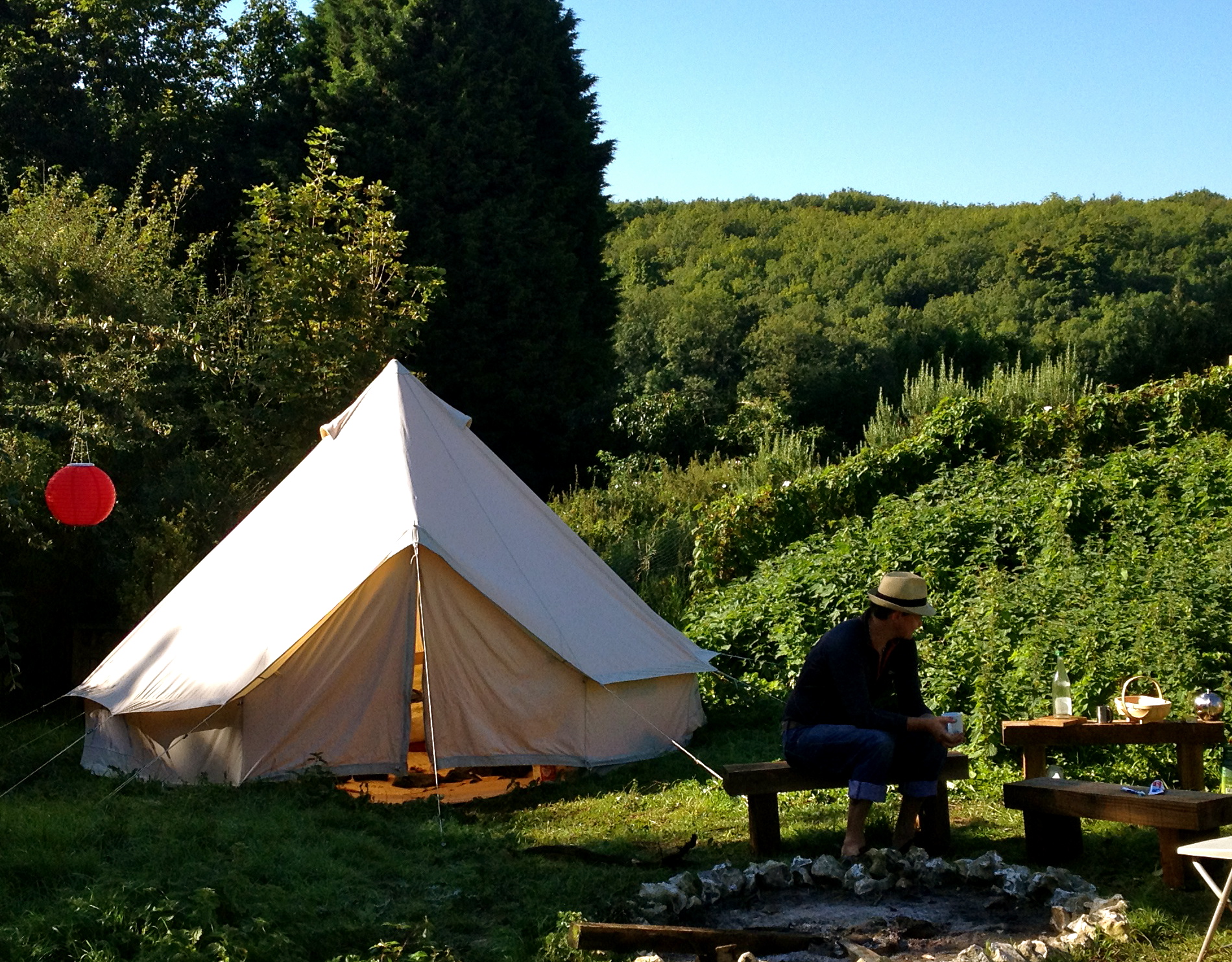
The early September heat, with clear sunny days equals camping at the Physic Garden Project (PGP), a weekend of harvesting in the late summer sunshine and making plans for the autumn. The plant invaders, particularly bindweed and bramble are beginning to loosen their grip as the days shorten and it looks like one last strim will take care of the over grown grass in the nursery and the herb circle.

Highs:

The herbs are making a comeback!

After, the disastrous event of the (probably trapped) rabbit in August and the decimation of the herb circle, I am delighted to report that, without exception, the herbs are recovering. Perhaps I can give you the full account of this during the depths of winter when all is quiet. But for now some positive findings on site:

The Crataegus  (Hawthorn) berries are abundant this year, and as a personal favourite of mine, it’s a delight to see the laid hedge and stand alone trees dripping with red berries.

The plucky little self seeded Viola tricolor (heartsease)are blooming away to their heart’s content after initially failing spectacularly, probably because I barrow loaded them from the nursery to herb circle in summer, from where they were, promptly, eaten by tiny little snails, of the like I have not come across before. I would take guess at the identity being Cochlicopa spp. The bed that I emptied in the nursery (but not the designated herb circle beds intended for them) and several beds that were not planted up with Heartsease are now populated with healthy little plants.

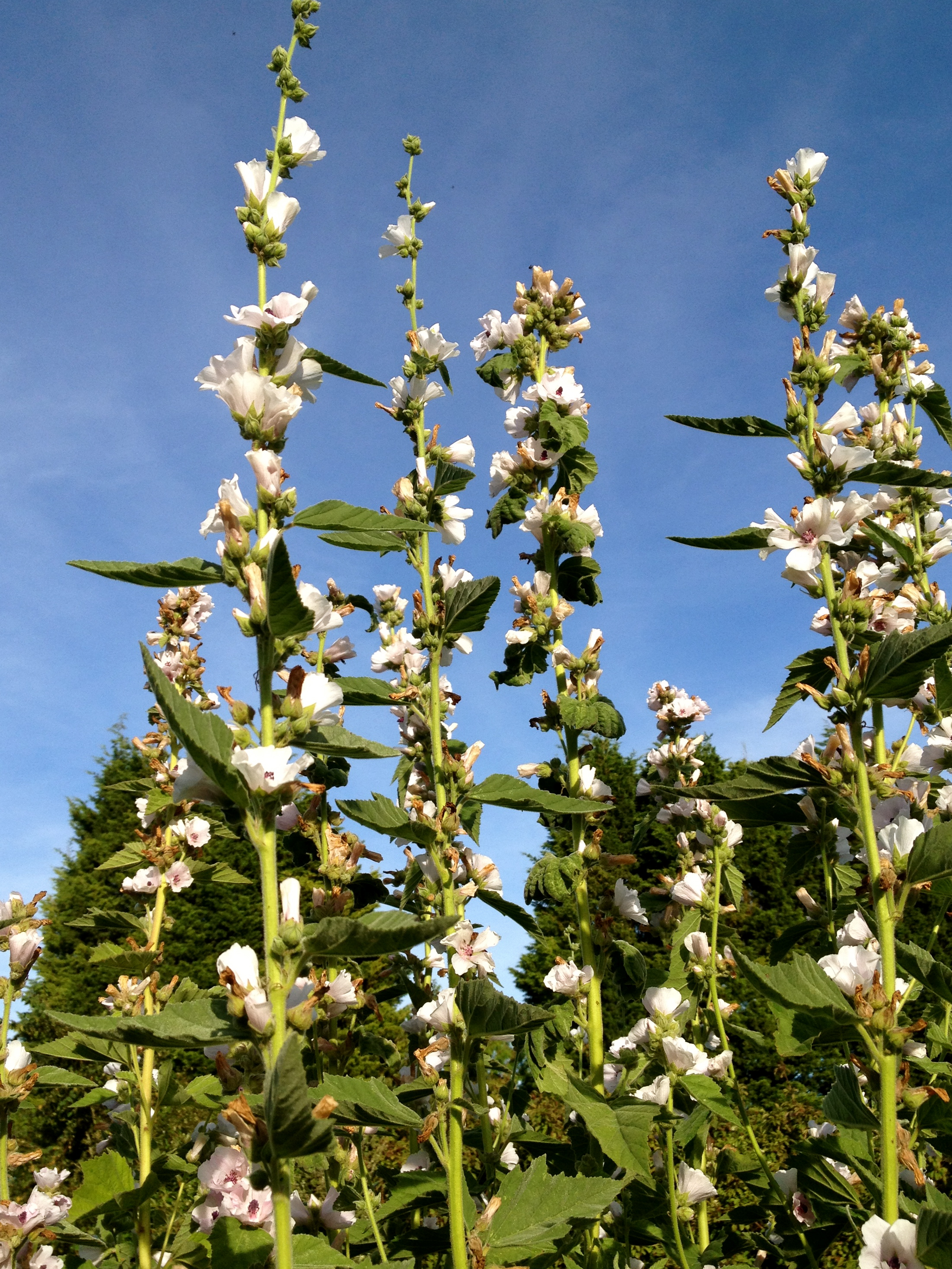
The 3-year-old Althaea officinalis (Marshmallow), which started from a single plant, is really thriving and in full flower. After harvesting the root last autumn and splitting the crown into around 8 plants, we now have over 6 foot tall beauties, which have withstood the bunny onslaught and are standing tall, and magnificent.

Althaea officinalis, standing tall

Lows:

The very same rabbits with whom, I was considering going into open combat, have now contracted Myxomatosis and are dying around the site. This is a cruel disease, modified by man to destroy the rabbit population, which was  introduced, again, by man, to this country. Balance has indeed been restored in favour of the herbs this time, but deeper philosophical questions of human actions and the subsequent impact on land and beast remain.

Just a week ago, the Zea mays (Sweet corn) crop, which looked destined to be one of the healthiest hauls of the season, and days away from harvesting, was systematically nibbled (still on the stalk) by something.

I have heard allotmenteer’s tales of badgers absconding with tantalisingly ripe corns but there were no breaches in the nursery fence and they would surely not leave half eaten evidence behind. Perhaps it was the mice that seem to live in and amongst the beds?

After discovering, that each and every corn had chunks taken out of it, and having just cleared an adjacent bed of any remaining plant material in preparation to add winter soil improvers and mulch I took a short walk to harvest a trug of Rosa canina (Rose hips) to make syrup.  On my return, the remains of a stripped corn were lying on the freshly cleared bed and then, I could see the perpetrator, nonchalantly sitting a few feet away on a fence post, a happy satiated squirrel!

The battle against the (beloved) pests continues..