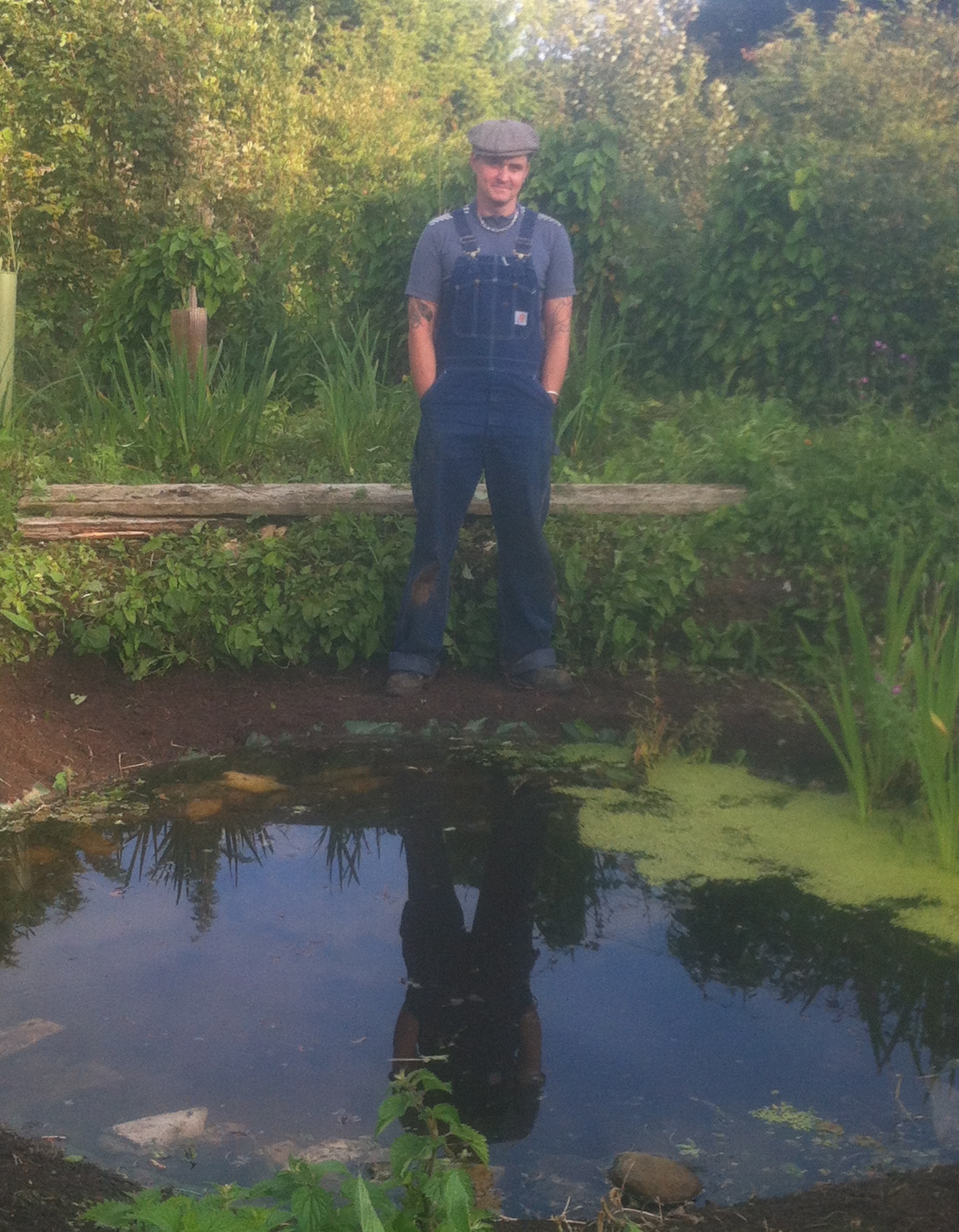
Calling all volunteers and garden fanciers

Dear All

We are back from our field trip and preparing for this Saturday’s Open Garden.

We are participating, for the first time, in The Sussex Beacon, Brighton and Hove Open Gardens

Sat 29th June 11am-5pm

We are just one of over 70 gardens participating this year, the fees are 12.00 on the day or just 10.00 in advance for an entire weekend of garden fancying.

Please follow the link for details, maps etc http://www.sussexbeacon.org.uk/opengardens

If would like to come and help out with preparations on Friday or Saturday please get in touch.

The more, the merrier!

Tickets for the event can be bought on line and i have a limited number that can be bought on the day.

Come and see the garden!

Image

Ralf’s trip to Ghana

My dear friend Ralf is doing some great work in Ghana. If you are interested in the project and/or you would like to support him in his work please follow the links below.

My story

This is the third time that I’m going to Ghana to teach and practise homeopathy. Since last year the project has been extended to include podiatry with particular focus on wound care and diabetes. It is a great opportunity to demonstrate how well homeopathy can sit with mainstream medicine. This time we have the opportunity to teach healthcare practitioners in hospitals and state clinics the basics of wound care and how to use homeopathy appropriately in these situations. There will also be session on Diabetes treatment and prevention (highlighting the role homeopathy can play in this). Over the years The Ghana Homeopathy Project has managed to train locals in homeopathy, who continue the work all year round.

Donating through JustGiving is simple, fast and totally secure. Your details are safe with JustGiving – they’ll never sell them on or send unwanted emails. Once you donate, they’ll send your money directly to the charity. So it’s the most efficient way to donate – saving time and cutting costs for the charity.

I would really appreciate your contribution, however small it is. It will help to keep this project going and help to make a huge difference to many lives.

Thank you

Ralf

https://www.justgiving.com/Ghana-Homeopathy-Project

April ’13

Spring at last!

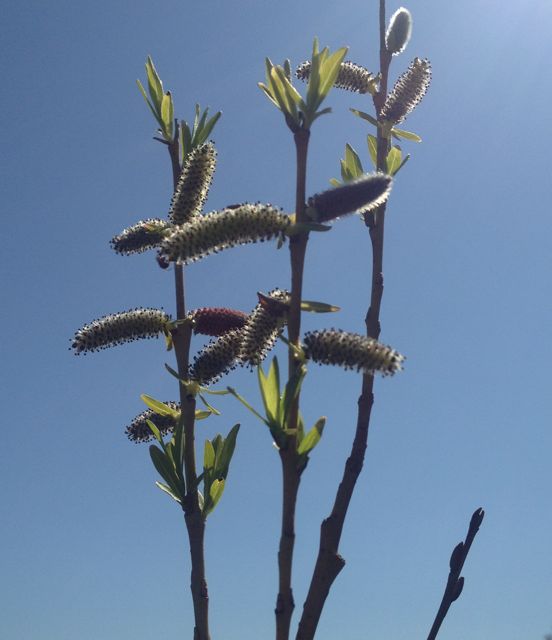
Willow

Willow

Finally spring has sprung and the garden is growing at full gallop. The joy of the new buds and unfurling leaves is so welcome this year after our remarkably long winter.

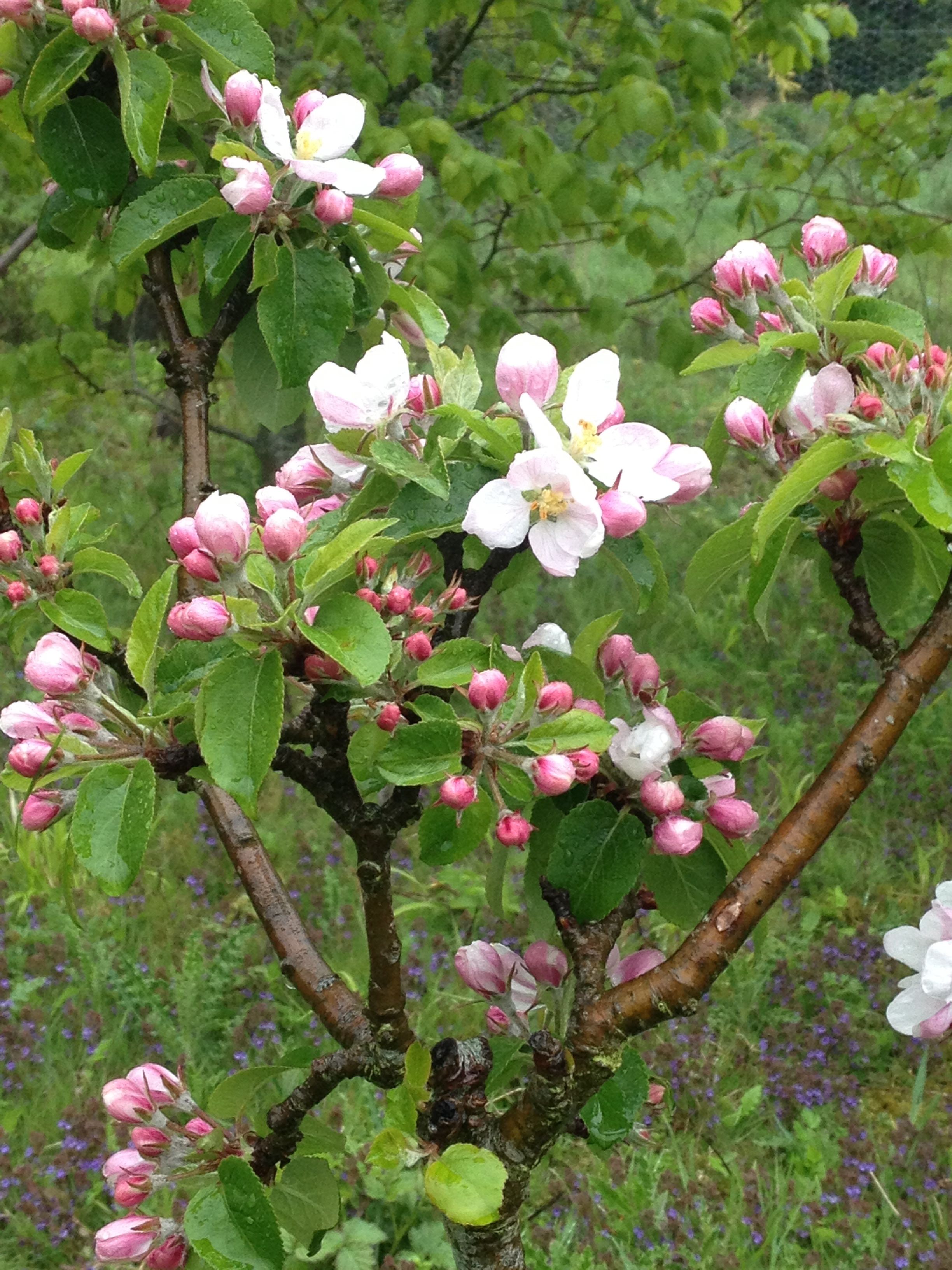
Our precious little Ginkgo biloba and the surrounding hedges of Hawthorn and Elder have come into leaf, the apple trees are covered in blossom and the herb circle is coming alive as the plants push through the surface of the nicely warmed soil.

Apple blossom

Apple blossom

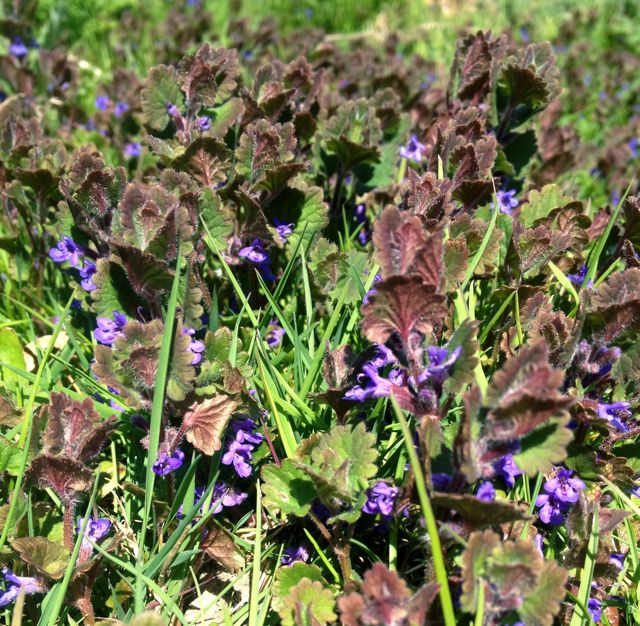
The garden is teaming with bees enjoying the ground ivy (Glechoma hederacea) as it gathers pace in its apparent quest to cover the garden and pink deadnettle (Lamium purpureum), which is popping up in all the free space in the herb beds. Since early March these two seem to have been the main source of food for the bees.

Ground ivy

Ground ivy


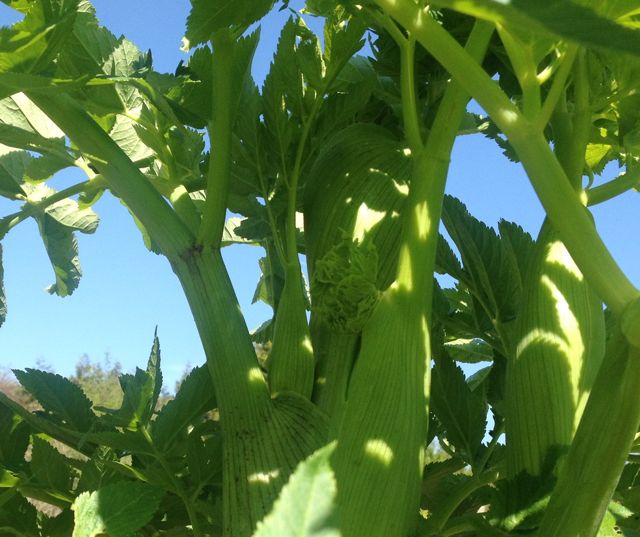
The rapid rate of growth over the last month has been astonishing to observe.  Some plants such as Angelica archangelica and Comfrey (Symphytum officinale) appear to doubling in size every few days.  Common Figwort  (Scrophularia nodosa), which wasps adore in the summer, is useful, pretty and prolific. The imported dandelions are doing well and happily I have found the first shoot of Licorice (Glycyrrhiza glabra) suggesting that it has made it through the cold winter on the South Downs.

Angelica

Angelica

I have planted beds of Calendula, Borage, Sunflowers and a few Milk thistle seeds from last year’s crops that have germinated and produced shoots within a matter of days this month. It is wonderful to see and to start to recognise the distinguishing features of even the tiniest shoots as they appear.

I am noticing that some seeds though, are taking a couple of years to germinate.

For example, a nursery bed I fully expected to be full of self-seeded Sunflowers this year from last year’s crop is instead full of tiny Poppies (Papavar somniferum) self-seeded from a lone beautiful poppy that had appeared in the lawn between the beds in 2011 and amongst them there are a handful of St John’s Wort (Hypericum perforatum) plantlets that were sown from bought seed also in 2011.

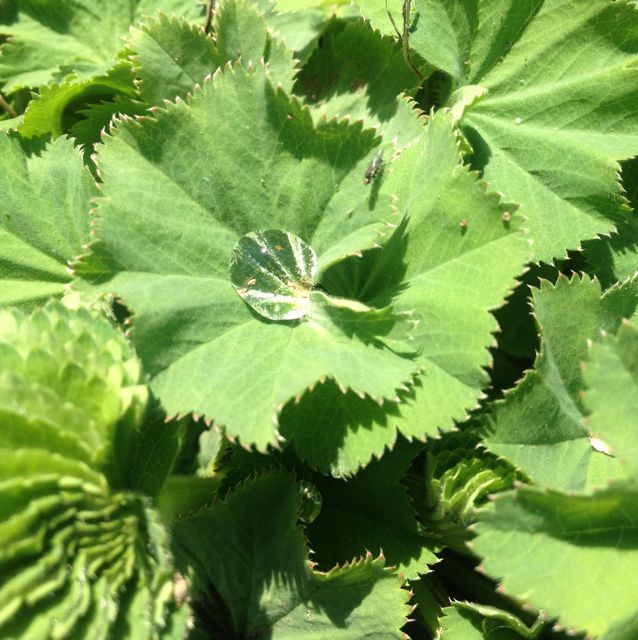
Ladies mantle with morning dew

Ladies mantle with morning dew


The pond, which was dug this time last year, is absolutely teaming with life. I am delighted to report that the resident frog, which was rescued from a bunker in Brighton last April, is still with us and now we have a full complement of newts, water boatmen and hundreds of tadpoles. It is however getting covered with green algae, which I have been told may be in part due to the fact that it doesn’t have much shade and that a solution to this is to introduce straw to the pond as the algae is drawn to and clings to it. Any tips on this gratefully received. For the moment though I have elected to leave it as it is, as the algae appears to be providing very good shelter, hiding opportunities and possibly food for the otherwise vulnerable tadpoles.

During April we have created a new garden bordering the chalky bank. We are planning to populate it with indigenous wildflowers with the help of a local expert in this field, from Stanmer nurseries. I am very excited to see this garden come into being and hope to provide photos shortly.

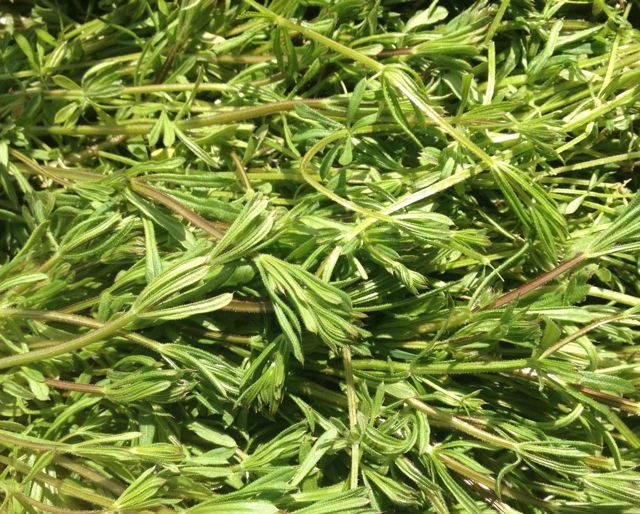
My favourite herb of the month has to be Cleavers (Galium aparine). We have been drinking gallons of Cleavers tea fresh from the garden over the last few weeks. I think it has a lovely delicate taste.

Cleavers

Cleavers

This is nothing new for the herbalist’s amongst you, but if you haven’t tried them before now is a good time to gather the young shoots for juicing or popping into salads before they become too fibrous and stringy.

They have wonderful health benefits and are commonly used as a spring tonic to cleanse the lymphatic system after winter.

Feb/March at PGP

February and March at the Physic Garden Project


From winter to spring?

February was a quiet and gentle time in the garden.

Chie (my most intrepid and regular volunteer and assistant) and I have cleared and prepared the nursery beds ready for this year’s seeds.

We have also worked our way round the herb circle, clearing the dead remnants of last year’s plants, weeded out the new bramble, useful but rather prolific ground ivy and red dead nettle.

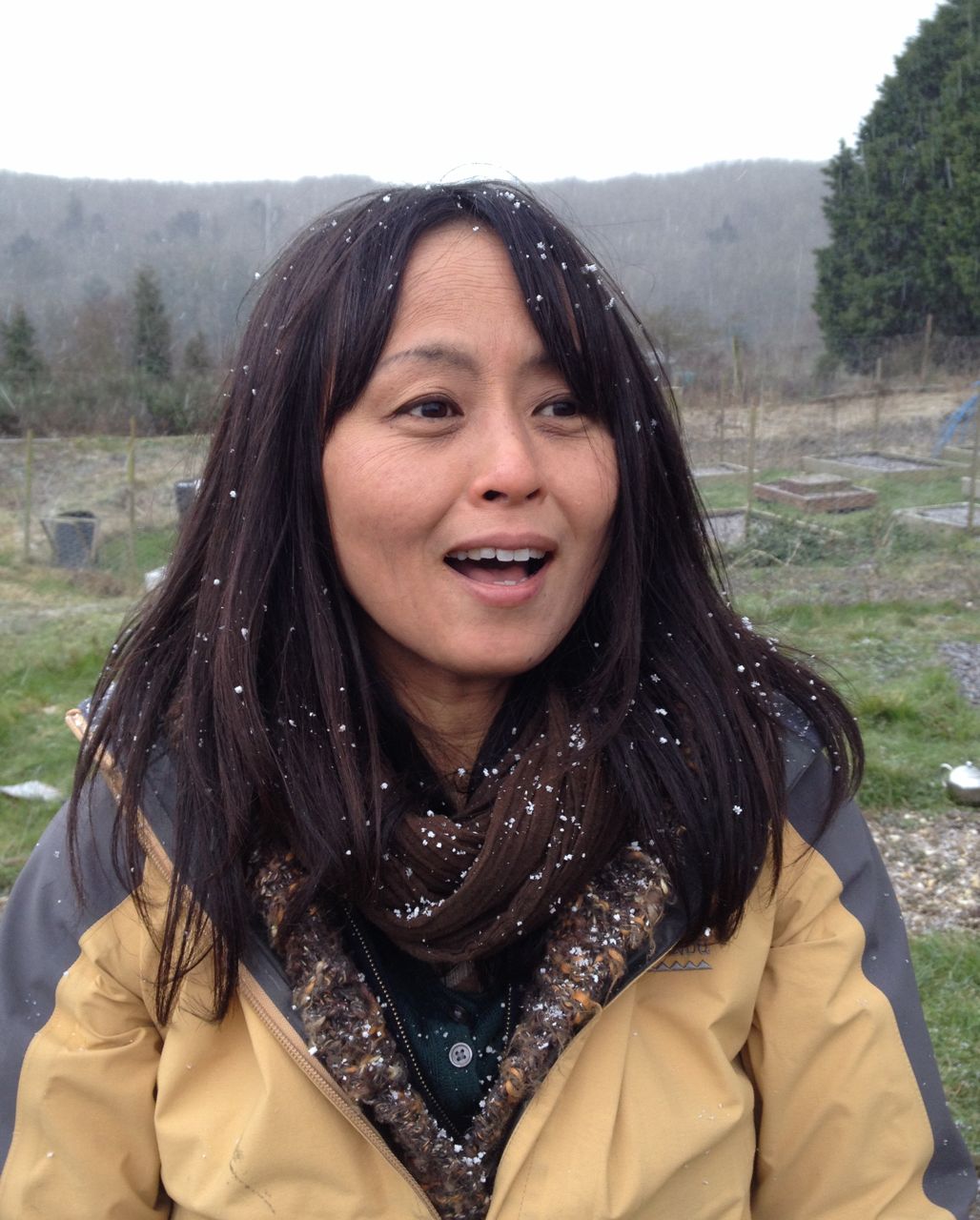
Chie in a snow flurry

Chie in a snow flurry

Even with the bitterly cold weather and amongst the snow flurries there are signs of new life in the herb circle. I was surprised to find tiny little self-seeded Thymes and happy to see the very first very dark pink marshmallow shoots appearing in the respiratory bed.

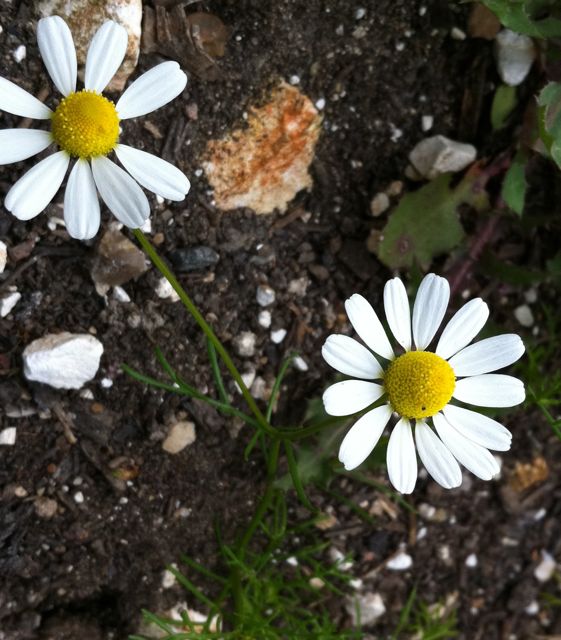
Hardy little Chamomiles

Hardy little Chamomiles

The German Chamomile plants have proved to be very hardy, grown from seed last year and having defiantly returned after the rabbit onslaught, they have been popping up all over the sleep bed right through the winter.

Image

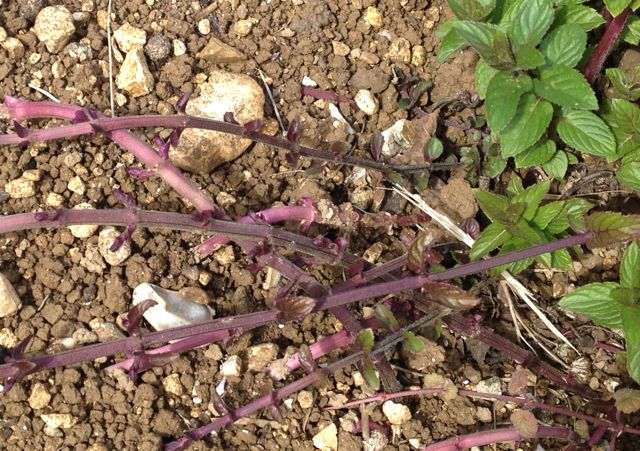
I might regret not isolating the chocolate mint (Mentha piperita cultivar) an indulgent buy! It is sending runners out at a rapid rate of knots and may start to dominate the digestive bed, but for now it’s great to see its vigorous lust for life at work. Another mint, the notorious Penny Royal  (Mentha puleium), is spreading like a carpet and packed with essential oil pulegone, a gentle stroke releases the most stimulating (but toxic) aroma.

Image

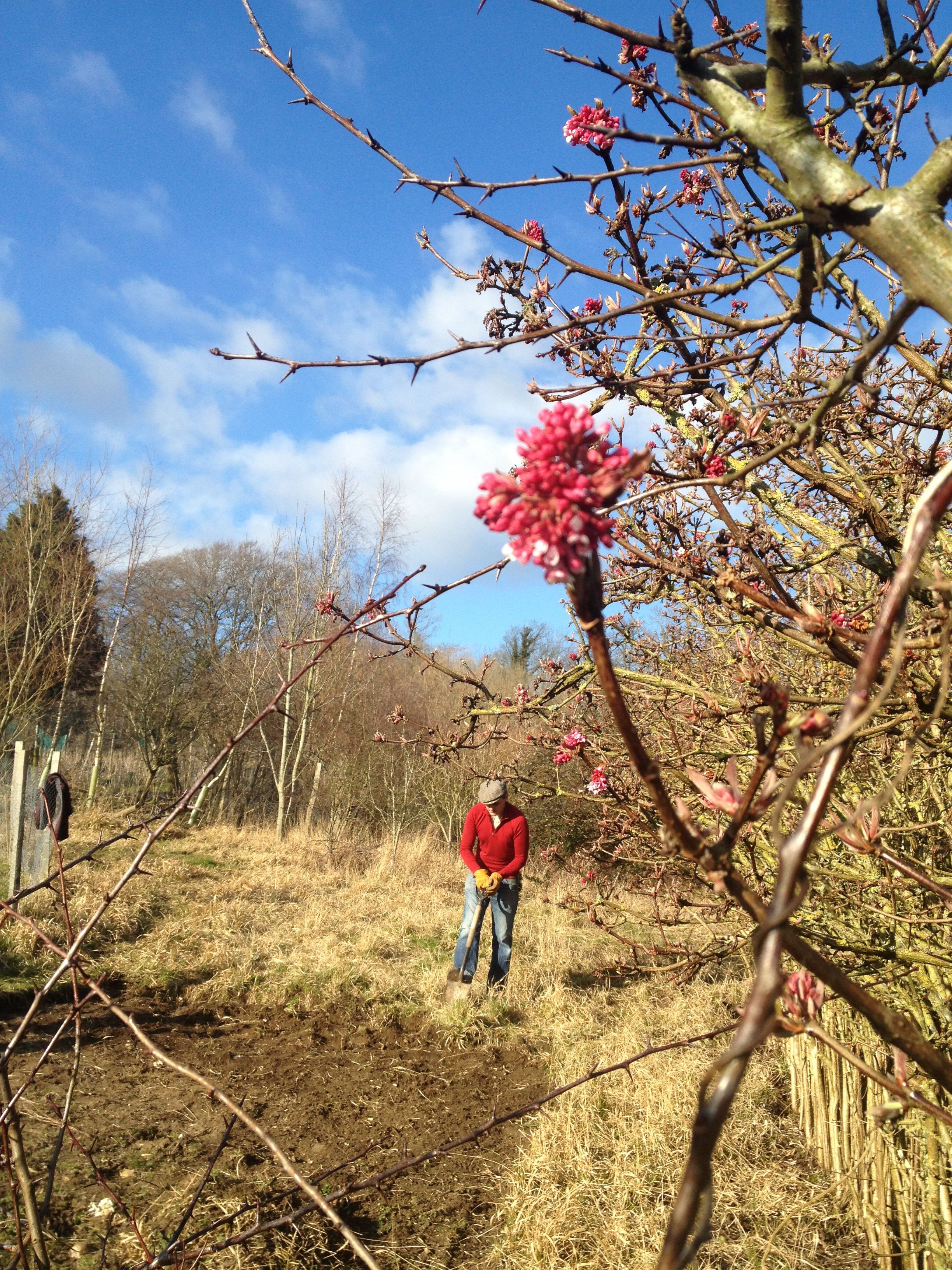
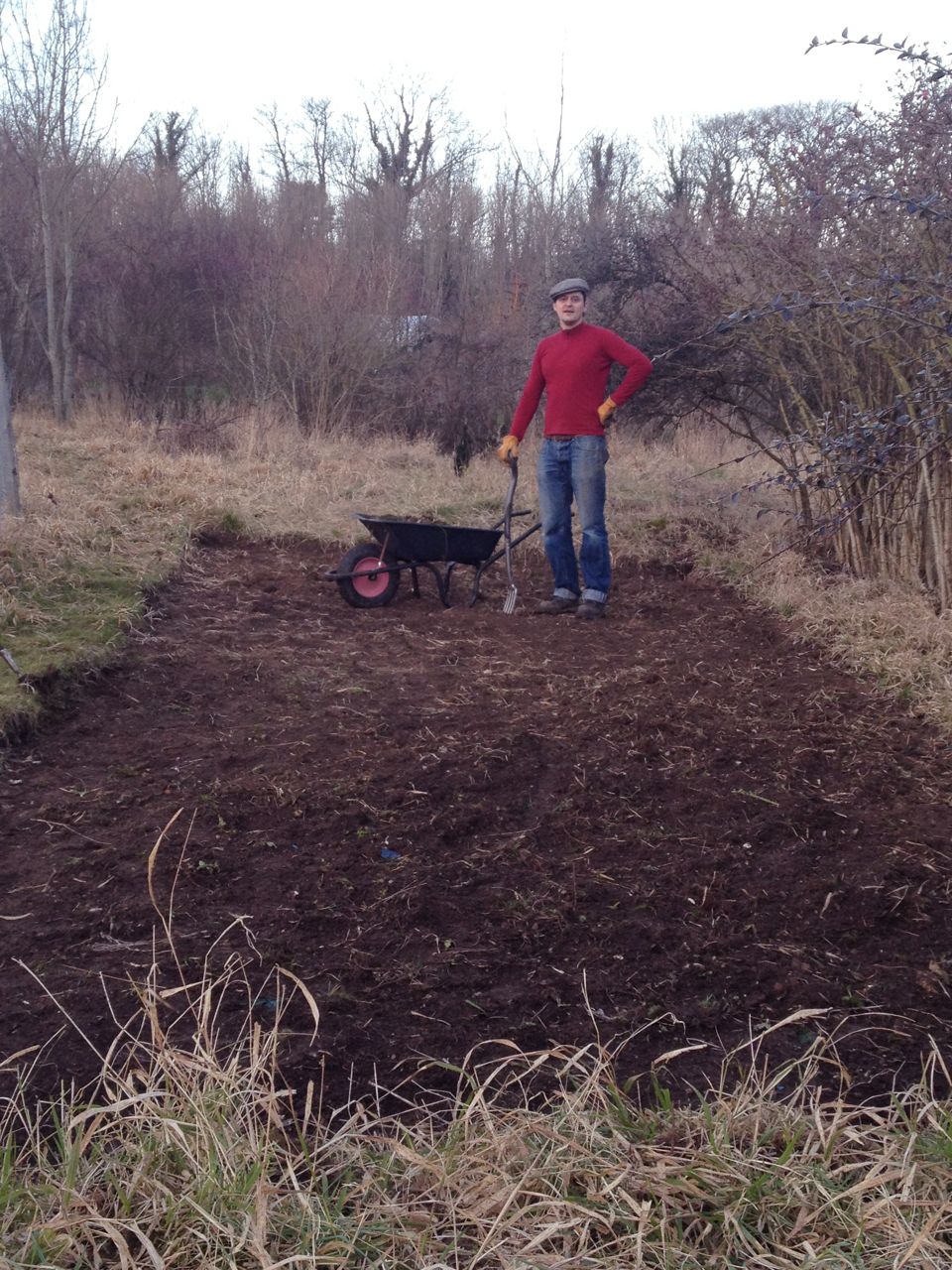
We dug our new vegetable plot on one of the tantalisingly sparse spring days, nestling it next to a lovely winter-through-spring flowering prunus hedge line. It is covered with black mypex in an attempt to raise the temperature of the earth in preparation for seed sowing.

Bax has nearly finished the new veg patch

Bax has nearly finished the new veg patch

We are now in March and there have been no real signs of the temperature rising! Apparently this is the coldest March in 50 years. It certainly has felt pretty chilly.

We have taken advantage of the slow start to Spring by digging up a whole row of young organic Goji berry plants, kindly donated by neighbouring project Village fruits, whilst they are still dormant. They are to become our brand new medicinal hedge and provide a windbreak for the herb circle.

We also received a wonderful Demascena rose from my friend and mentor, Sarah Fury, which is now springing to life and whose blooms should provide us with the most intoxicating heady perfume this summer!

More herbs are breaking the surface, and this week we were delighted to discover the garlic we planted in January standing in rows like a little protective army in the heart and circulatory bed.

Although a little later than in the wild, it would appear that the Ramsons bought as bulbs last year are just peaking through the soil and as promised, we won’t be disappointed with the purchase!

Chie and I had a little field trip, seeking out Silver birch trees to tap for their sap.

We used the traditional herbal method of drilling a small hole in the tree and feeding in a straw to collect the sap in a tied on plastic bottle. We have since discovered a rather more tree friendly method using just a knife. To see a video of this method in practise please follow this link: . http://www.naturalbushcraft.co.uk/wild-food/tapping-the-birch-tree-for-sap-in-march-collecting-birch-sap-a-clean-sugar-rich-water.html

The sap is rising now, perhaps a little later than usual due to the cold weather so there is still time to try this wonderfully therapeutic spring tonic for your self. It is very important, should you be new to this and fancy trying this for the first time to follow some simple guidelines including correctly identifying a silver birch, remembering to return for the sap and not leaving the tap running and then to re-seal the hole you have made once you have finished.

In memory of dear Kaviraj

My dear friend Vaikunthanath Kaviraj passed away this month.

May I introduce you to this great man, a homeopath, agro-homeopath, teacher and friend to all who knew him.

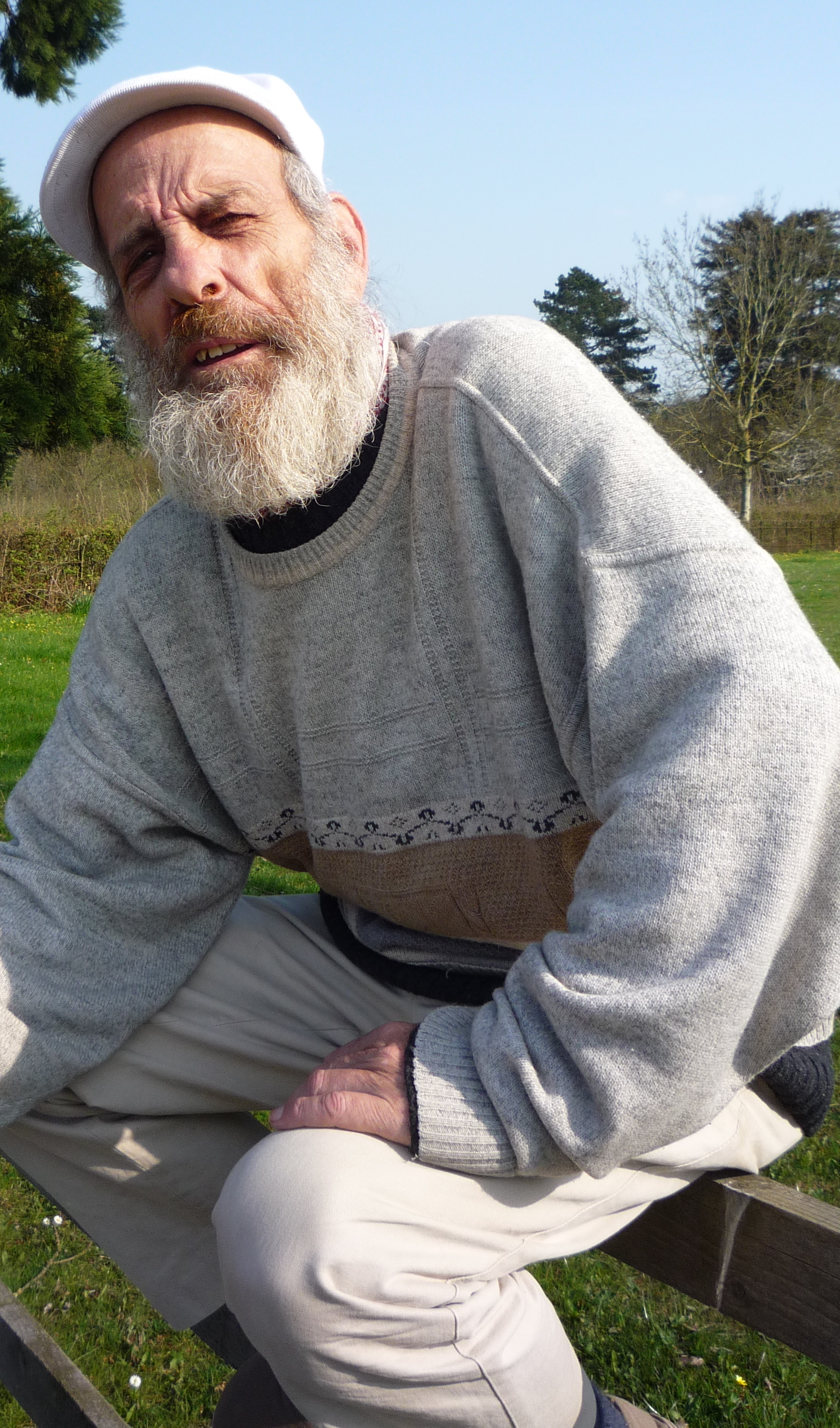
I suspect this is one of the few times Kavi sat on the fence!

I suspect this is one of the few times Kavi sat on the fence!

This great teacher has spent his life healing patients all over the world using homeopathy and was, i believe, one of the founders and certainly one of the finest teachers of agro-homeopathy ( the treatment of plants using homeopathy).

http://www.homeopathyworldcommunity.com/profile/VaikunthanathdaKaviraj

My dear friend Kaviraj

My dear friend Kaviraj

              Vaikunthanath Das Kaviraj  31st October 1946 –   2nd March 2013

With great sadness I report the passing of Vaikunthanath Das Kaviraj, born  Ben Rozendal, who many of you knew as the Plant Doctor. He died on March 2nd in Northern France.

A Dutch Homeopath, Kaviraj was an extraordinary healer and researcher, who did pioneering work in the development of agrohomeopathy, developing it to a high art. His knowledge of that field was unmatched. He was one of the most generous hearts I’ve ever encountered. His was a life dedicated to service and he spared nothing to help others. It was common for him to traverse continents to visit patients who couldn’t travel to him. Lately he had gone to India where he was teaching sustainable agriculture to poor farmers. He understood the delicate interactions of plant, animal, insect and microscopic life.

Kaviraj was a passionate person who spoke frankly and did not suffer fools or injustice gladly. He was ardent about stopping GMO crops from ruining agriculture and harming life on the planet. He saw it as criminal, an illegal experiment, conducted without the consent of the subjects.

During the 1960′s Kaviraj co-founded the Magic Bus company, offering rides to India by minivan. He experimented with psychedelics and kept company with Alan Ginsberg, Bob Dylan and Ken Kesey. He ran organic farms in France and Belgium, studied with an herbal witch and astrologer and travelled the world to study plants. While in India he became ill and was cured by homeopathy. The desire to understand what had cured him lead to an apprenticeship in the 1970′s followed by 10 years running Dr. Chatterjee’s rural clinic. He wrote textbooks on various aspects of homeopathy as well as the fictional Boon Files (in the style of homeopathic detective stories.). In 1982 he was initiated into the Bhakti and Shamanic healing traditions.

In 1986 Kaviraj successfully treated apple trees with Belladonna and subsequently moved to Australia where he did large scale experiments with remedies for sick plants. This led to his pioneering book Homeopathy for Farm and Garden. He was a unique and powerful spirit who lived with purpose every day, spending a lifetime working to relieve suffering and preserve life.

I find it difficult to imagine him gone. He still lives in the minds of those he taught, and the hearts of everyone who knew him.   Good bye dear friend.

(You can read an interview Kaviraj gave to Hpathy in Dec. 2008)

Author: Alan V. Schmukler

http://hpathy.com/agrohomeopathy/v-d-kaviraj/     

Home  /  Biographies of Homeopaths  /  Who Was Kaviraj? The Untold Story!

Who Was Kaviraj? The Untold Story!

Iman Navab, who was a close friend of V.D. Kaviraj, offers a rememberance of him, including some stories in Kaviraj’s own words.

On March 2nd of 2013 at 6:30 p.m., to our sorrow we had a great loss as Vaikunthanath Kaviraj left to a new journey. Like Hahnemann, he passed away in France. He is now free of the constraints of his earthly-life. Kaviraj was known as a pioneer in Agro-Homeopathy and as doctor of plants. However, to his pupils and those who know him well, certainly he was much more than that. Kaviraj proved to be a remarkable philosopher, author, a loving father, restless activist, a natural healer and a true Hahnemmanian homeopath. Wisdom was a God given gift to him, which no one can learn in any school. Kaviraj always recognized the truth and defended the truth without compromise. Indeed, Kaviraj deserves to be regarded as Prince of Homeopathy due to his genius, deep knowledge and outstanding skills in classical homeopathy.

His name, Vaikunthanath Kaviraj, was an honorary title granted to him by his spiritual guru in India. Kaviraj was not a religious person, but he followed the Vaisnava spirituality beliefs and he had a very strong faith in the Lord. Once Kaviraj said: “I owe, I owe, it’s off to work I go. I don’t owe anything to anyone, but owe my skills to God and he does not charge any interest.”

Kaviraj was a unique, cool, talented individual; he knew five different languages; among his favourite music was Mantra; his favourite animal was the horse; and he liked French made cars. Among the modern scientists, he favoured Albert Einstein. In art, Kaviraj really enjoyed Surrealism and among his favourite artists was Hieronymus Bosch.

Kaviraj was born on October 31st of 1946 in the Netherlands. According to Kaviraj, at the age of 14, he held his first job at a tree-nursery, with adjacent herb garden. The master gardener became his first teacher. A few years later, he learned more from a woman called Mellie Uyldert, a famous Dutch herbalist and astrologer.

It is difficult to encompass his biography in such a short article. In a nutshell, he was a homoeopath and scientist with more than 30 years experience and he was the developer of homoeopathy for agriculture. In this regard, he said: I am a homoeopath. Learned in Vriindavan UP Bharat, as an apprentice of Dr Chatterjee, who had 70 years of experience. He taught me very well. I discovered that the principles of homeopathy stem directly from the spiritual plane as described in SB 1/5/33. I developed Agrohomeopathy from a chance experience with a client in 1986.

In 1964, for personal reasons, Kaviraj took his first trip to India. This was the beginning of an extraordinary chapter in his life. In his own words, Kaviraj explained:

“I was a restless soul – and finally found direction in the art of healing. In the village of Vrindavan, I learned homeopathy. I came to stay 3 nights, because that is the maximum, when visiting a Holy Dham – a sacred place. On the first day I got sick – great purification, because all the sins of youth came out. So I could not travel. I tried herbs to no avail – being an herbalist and acupuncturist at that time – and my needles did not do it either. I went to see allopathic and Ayurvedic doctors, Mantra-Wallahs, who I have personally seen cure people, but none could help me. After 11 weeks of this, I lost a lot of weight. Finally, one day I walked into the market and asked for a homeopath. One of my friends, a cloth merchant, told me where to go. I arrived and was asked what the trouble was? I replied, forceful explosive diarrhea every hour, day and night, with good appetite and thirst, eating and drinking aplenty. So he gave me 3 little pills and told me to come back in three days. I asked, what are you giving me? He replied, I don’t like self medication, so I won’t tell you. “But I want to know”, I said. Be here every day at 6 am and I’ll teach you, he said. And that is how I became a good homeopath. I lived in a rented house, where I practiced, just across from the maternity hospital. I served many people and those from as far away as Nandagram. So by Radharani’s mercy I was allowed to stay and treat countless patients in a period of 10 years. I would open at 7am. In the evening I used to go to the market and get fresh vegetables.”

“Loi Bazar market is where all the mukut wallahs have their shops and where you can buy everything, from sweets, to cloth, to food and deities. You see them making them, right in front of your eyes. There are some very good tailors there too. The monkeys of Vrindavan are the smartest in the world by far. They go on rampages. They all sit on the roofs. Then the biggest male jumps up a pole from which all the electricity wires hang to the next pole. He will furiously shake it, till those wires touch each other and the market is dropped into darkness. Then they all come down from the roofs and go on a stealing spree – 300 of them. The merchants panic, grab lights, and while they light an oil lamp, the monkey steal his fruits, nuts, cookies, vegetables, and anything directly edible.”

“In 1982, I received initiation in the Bhakti tradition from Srila Bhakti-rakshak Sridhar deva Goswami, in the Brahma-Madhva-Gaudiya Sampradaya or disciple succession. In 1983, I received my second initiation, after which the title Kaviraj was bestowed upon me.” (kaviraj comes from kavi – healer; and raja – king; king of healers. All Ayurvedic doctors are called kaviraj).

“In 1986, while spending a few weeks in Europe to renew my visa, I accidentally began my experiences with plants, which led to the publication of a book on the subject in 2006. In 1990 I moved to Australia, where I did many experiments with remedies for sick plants on a large scale. In 1997, I received another shamanic initiation, this time from Aboriginal Men of High Degree, (the literal translation of their titles as medicine men) during a corroboree in Arnhem Land. Since 2000, I have lived in Holland, where I spent my time writing about homeopathy and medicine in general. And in 2007, I moved to the United Kingdom, and continued my services.”

Throughout his career Kaviraj received many honourary titles and awards for his selfless contributions to homeopathy and people in distress. He volunteered many times to travel and help the helpless in situations such as Haiti’s earthquake. He wrote countless articles and some essential books on homeopathy for farm and garden. He was the founder and CEO of the Similicure Company, and an advisory board member of the Applied Research in Homeopathy Foundation of Canada.

Kaviraj was part of my family, he was my own spiritual guru, and after Hahnemann, to me he was the godfather of homeopathy. He touched and saved so many lives including trees, plants, bees and animals. We miss him every day, his light will always remain in our hearts, and we love him forever.

I always keep in mind this quote by Kaviraj “Mother-Nature is the best teacher and if we want to read her book, we must walk its pages. She will reveal all to the sincere who want to understand.”

God bless his soul.

New year, new plans.. Jan’13

January 2013 at The Physic Garden project (PGP)

New year’s day, which seems like an age away now, was a perfect day at PGP.

With the sun shining and the ground soft enough to pull up the turf but not too heavy to clog up boots and weigh us down, we began gently digging a new vegetable garden, whilst making plans for the year.

A few forkfuls in and we were back in the zone, enjoying the calming influence the land brings along with the excitement of what the year ahead may hold at the garden.

When the new vegetable plot is in place, the raised beds can become the herb nursery and the vegetables can then go straight in the ground on an annual rotation.

Practical plans afoot include investing in a boundary fence, which is rabbit and reluctantly, deer–proof.

We lost the majority of our crops last year due to one kind of creature or another so this year we are determined to be more prepared and equipped to deal them.

I would also very much like a herb drying shed, as optimistically, I am imagining we will have enough mature plants to harvest this year to warrant a suitable shed.

I am hoping to make a fair portion of the medicines I will use in practice from PGP this year including fresh herb organic tinctures (dried herb) teas, balms and creams.

Other exciting plans for the year include inviting a lot more people to visit, take part and learn about the joys of plant medicine.

We will be running regular volunteering days and from late spring we will also be offering practical workshops on site and of course there is the annual open day.

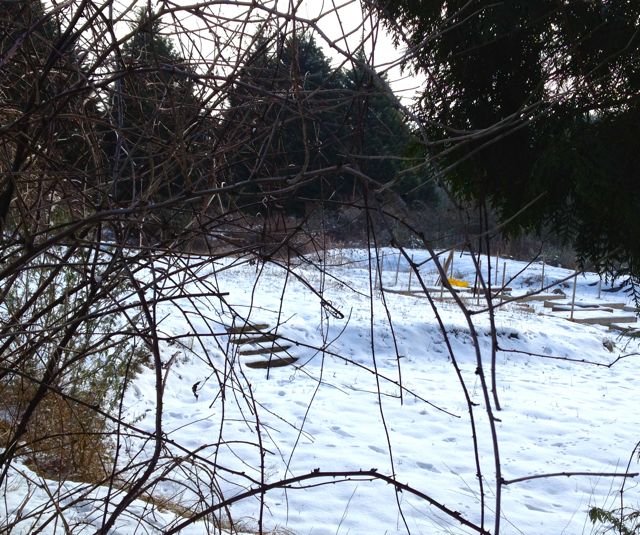
We had quite a bit of snow this month and so most subsequent visits to the garden were limited to enjoying the scenery and taking a look at the tracks in the snow to see whom our wintery visitors had been. As suspected there were plenty of rabbit tracks which lead to a re-established warren at the northern boundary, and one or two deer have been on site.

animal tracks in the snow

animal tracks in the snow

There are foxes around the Stanmer Organics site but there were no signs of them visiting us during the snowy period.

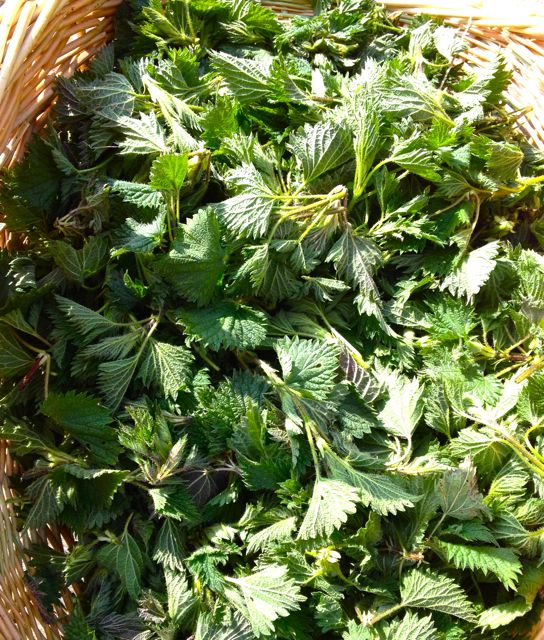
Since the melt the first new nettle shoots have broken cover and I have made my first nettle soup of the year.I think it is absolutely delicious so I will give you the recipe to try!

I have noticed that the nettles always tend to grow at the bottom of a hill and in the case of PGP they are growing both at the north and south boundaries in abundance where there is a raised bank interrupting the gentle slope. At these points the land is rich in minerals deposited by the rain running down the hill. Cleverly the nettles grow here, absorbing nutrients that we can then harvest.

The health benefits of nettles are numerous and I would thoroughly recommend harvesting some and trying first and foremost a cup of fresh nettle tea. I usually just stuff a handful of nettle tips straight into the pot for the most delicious and delicate tea. It is so much better than any bought nettle variety that I have tried.

Fresh nettle tops

We managed to pop the garlic into the ground in January, using the biggest of last year’s harvest to provide this year’s crop. Whilst clearing the cardiovascular bed to make room for them I stumbled upon the ransoms bulbs lying just under the surface in wait for spring. I have yet to see them above ground as, failing to find any growing naturally on site, I bought a little pot of what looked like soil as it was summer and they had gone over and retracted back to bulbs, with the promise that come spring I would not be disappointed. Lets hope not.

I have started practising from a multi-disciplinary clinic in Hove this month, which is a wonderful space that both myself, and my patients are enjoying. Apart from tackling a stream of respiratory disorders, I have had the opportunity to use freshly made therapeutic creams, salves and balms with good results including Melissa lip balm in the treatment of cold sores and a wonderfully soothing fresh oat milk and chickweed cream, with a few drops of lavender, to calm angry red eczema and to help avoid a secondary infection.

December ’12

December at The Physic Garden Project

For the December edition, whilst all is quiet at the garden, I thought I would give you a little overview of the project so far in the form of a brief account of events and a photo diary.

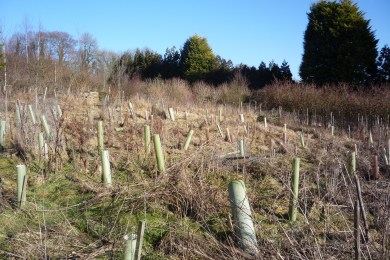
I became a director of Stanmer Organics mid January 2010. I was in the middle of my training to become a Medical Herbalist and Naturopath and I wanted a practical application for my learning experience. This is when I took possession of this small parcel of chalky, mainly uncultivated, land and the Physic Garden Project came into being.
 

Image

in the beginning

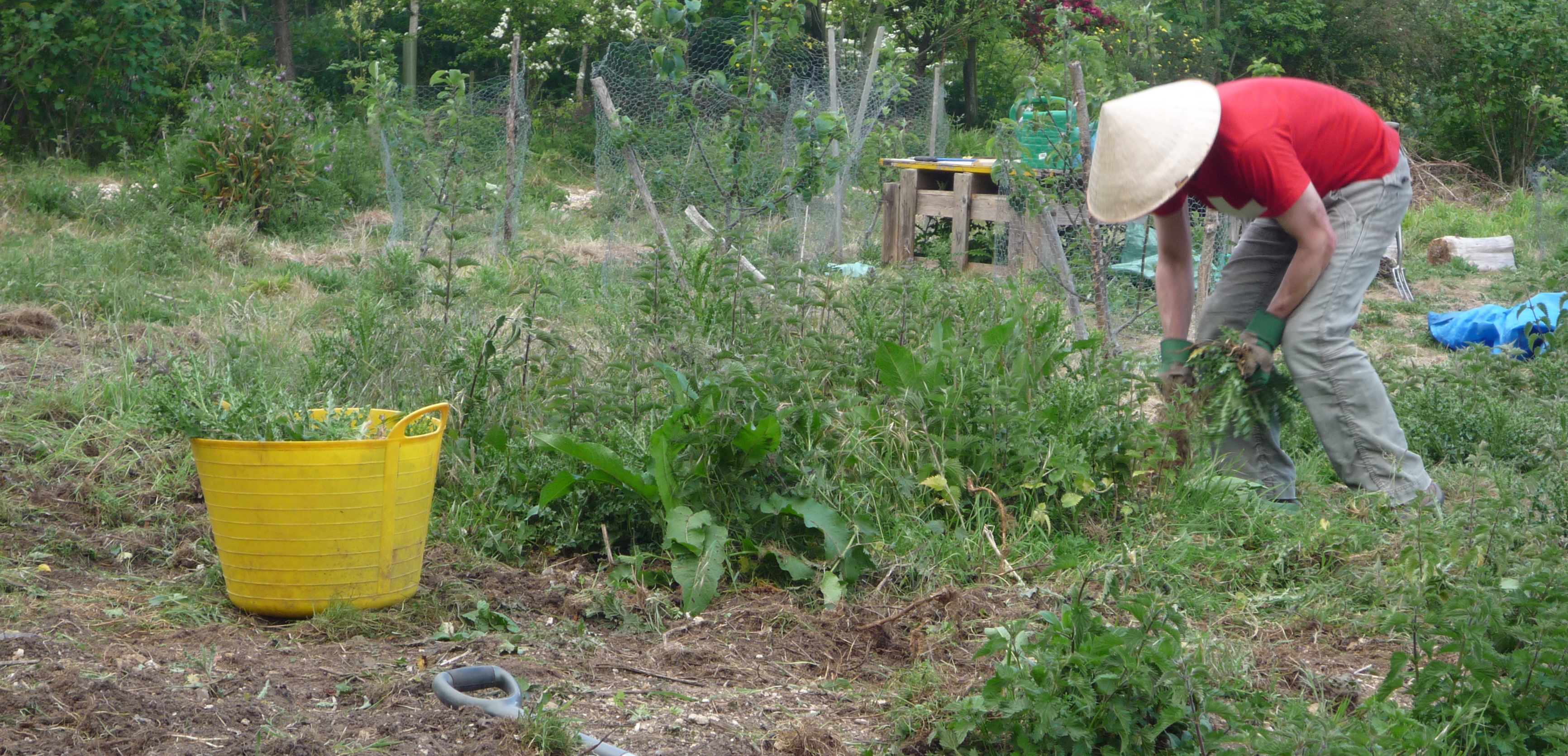
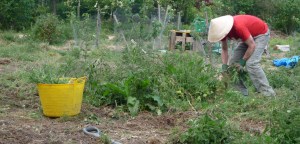
In the first year, we began by dividing up the abandoned tiny grapevines from the previous project between the member groups of Stanmer Organics, before the massive, and on going task of clearing the land of weeds commenced. We cleared carefully by hand, removing bindweed, dock, thistle, bramble and excess nettles and looking out for any naturally occurring herbs and wildflowers that were already growing on the site.
P1010562

clearing the land

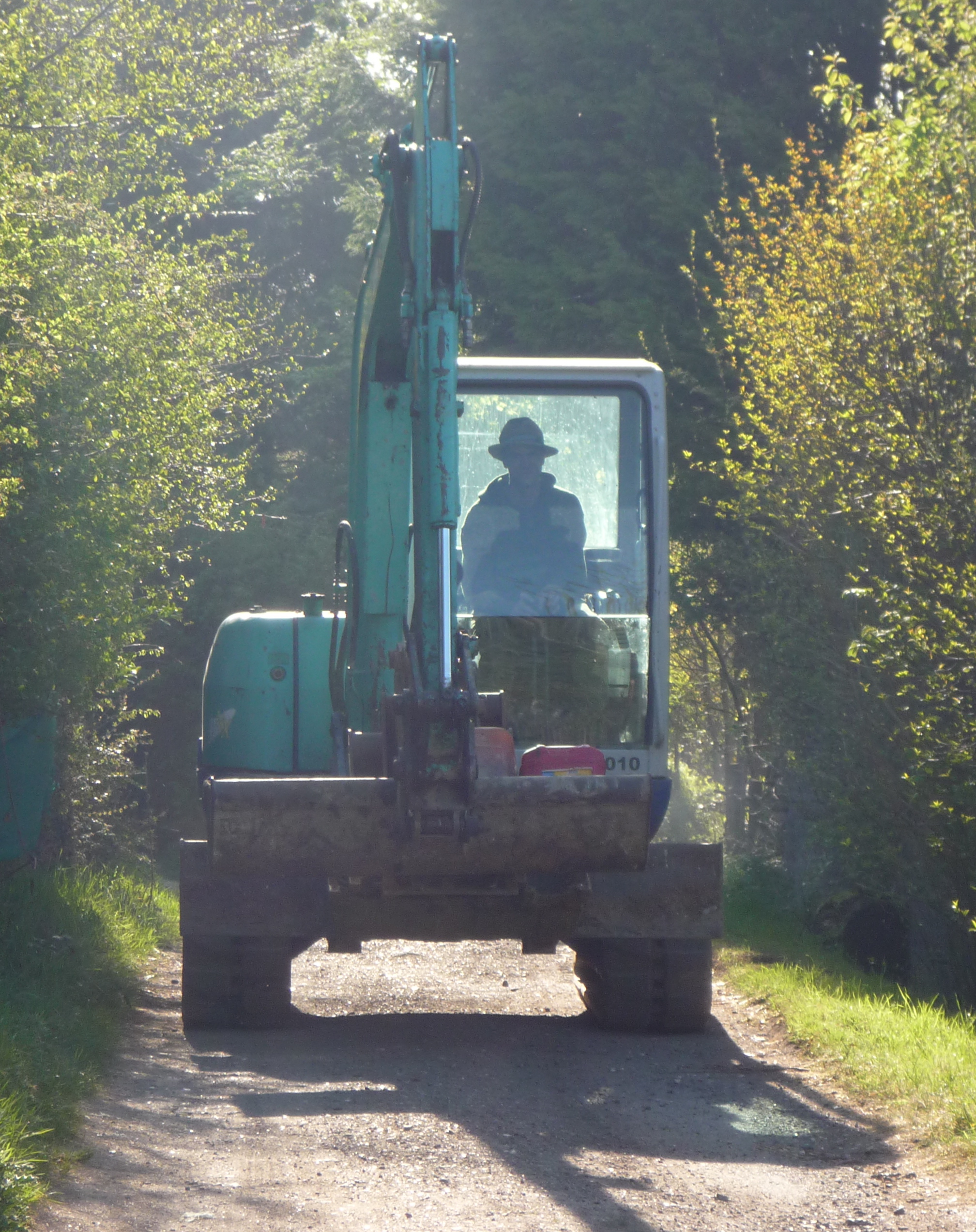
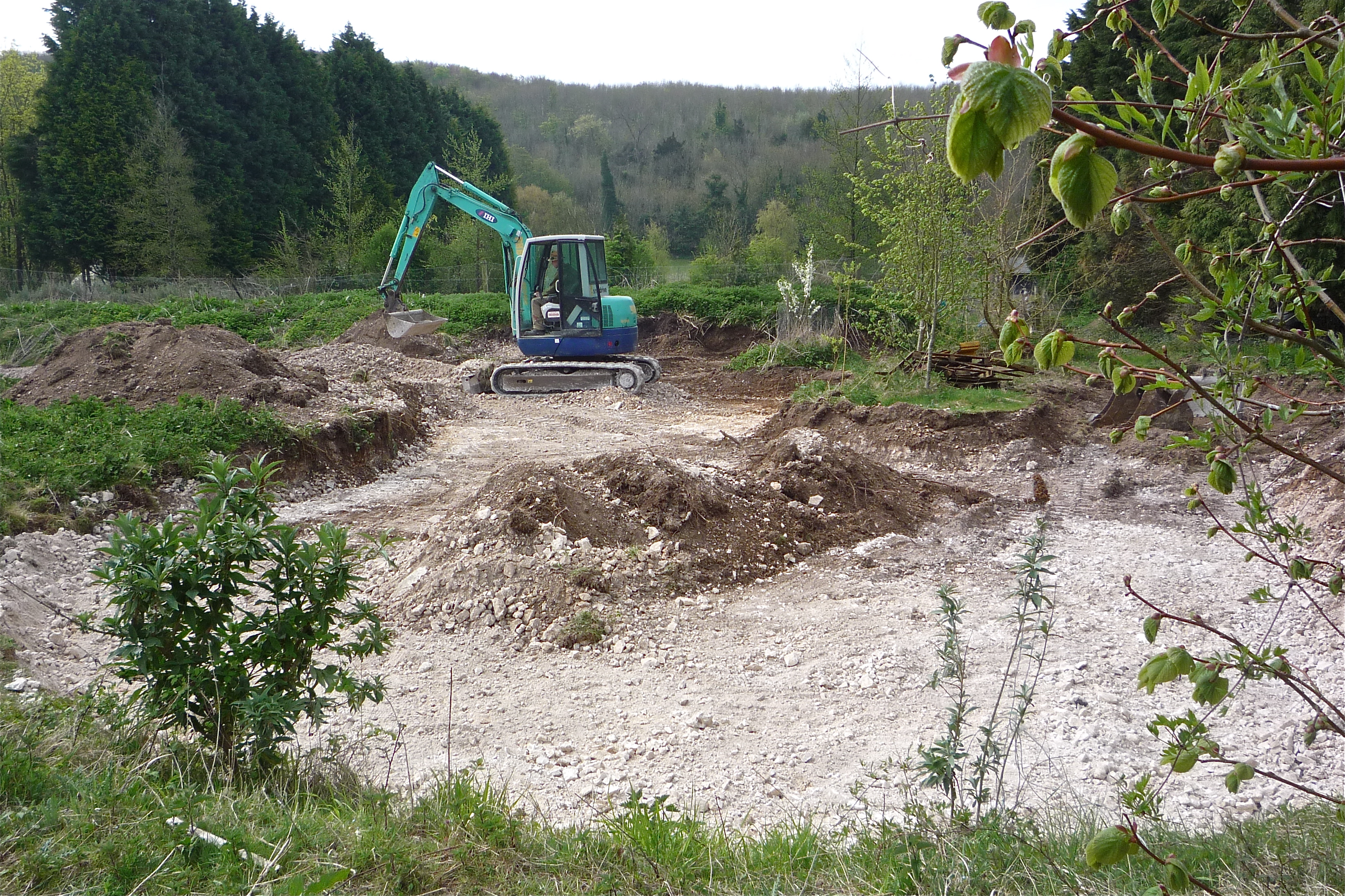
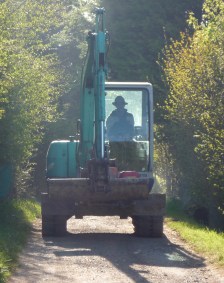
In the spring of 2011 I hired a 360’ digger and a driver from an adjacent project (‘Future roots’, yurt builders) and we set about re-landscaping part of the site, with the primary task being to fill in the approximately 12m by 4m deep pit at the southern boundary, which was the legacy of a former and abandoned project.
bring in the digger
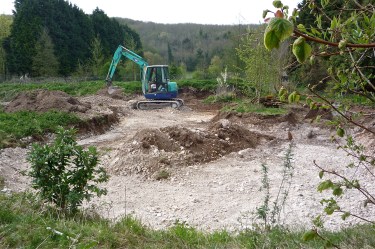
bring in the digger

re-landscaping

re-landscaping


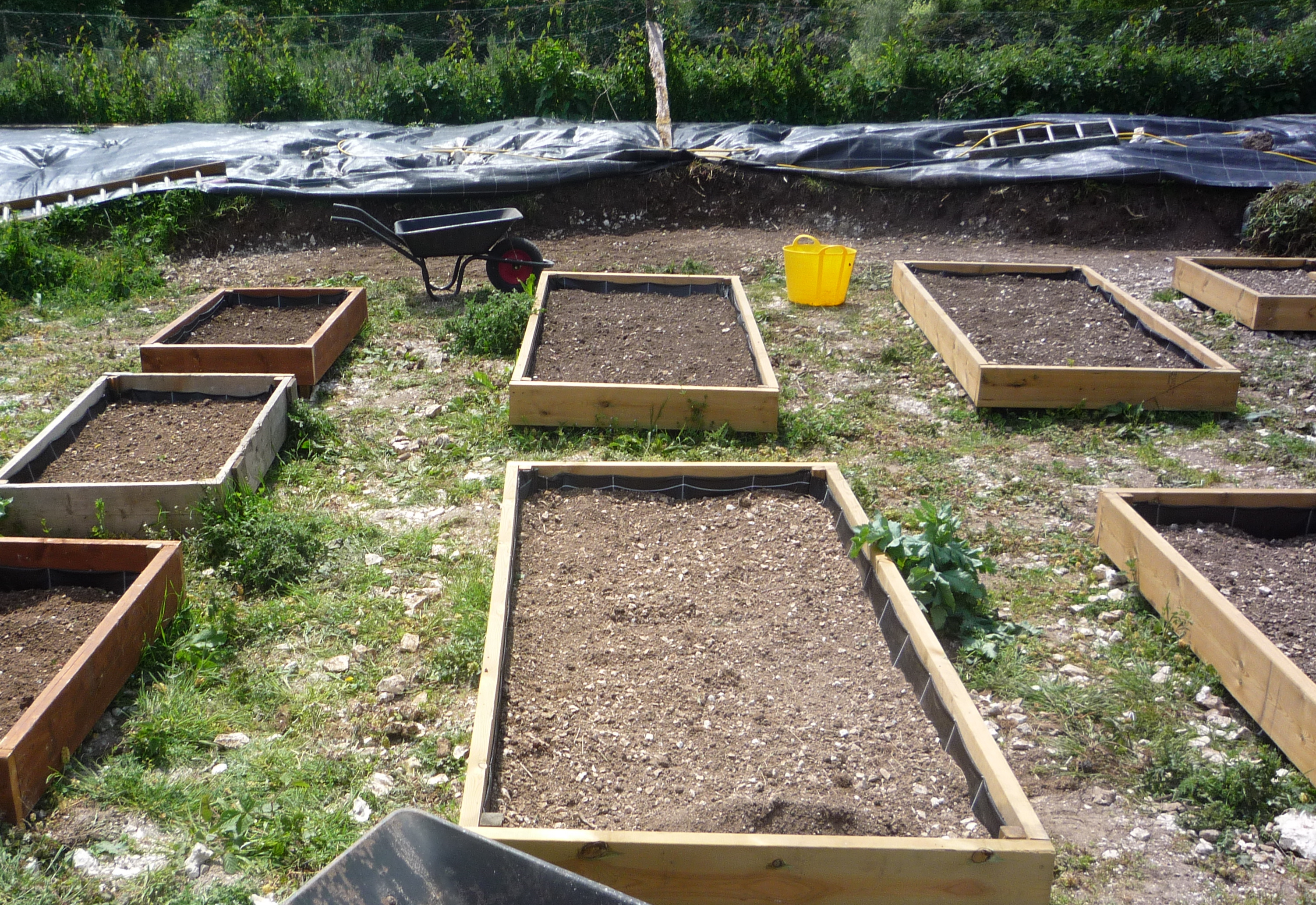
Once landscaped, the new area provided a great space for our first planting scheme. Due in part to the very thin soil and also in an attempt to establish one area of relative order on the site, we decided to make half of this this into an area of 17 raised beds, filled with a combination of our own chalky soil and an imported mix of organic compost, from our neighbour (Brighton Community Compost Centre) and the other half into a clover lawn, which is relatively flat and ideal for future workshops and classes.
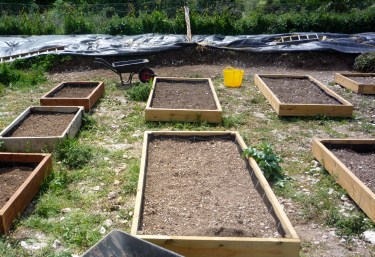
building raised beds

building raised beds

At last we could start growing, and from seed we began the first little herb and vegetable garden.

Our summer open day 2011 was a remarkable success, with a merry band of enthusiasts signing up to our future volunteering, workshops and medicine making plans.

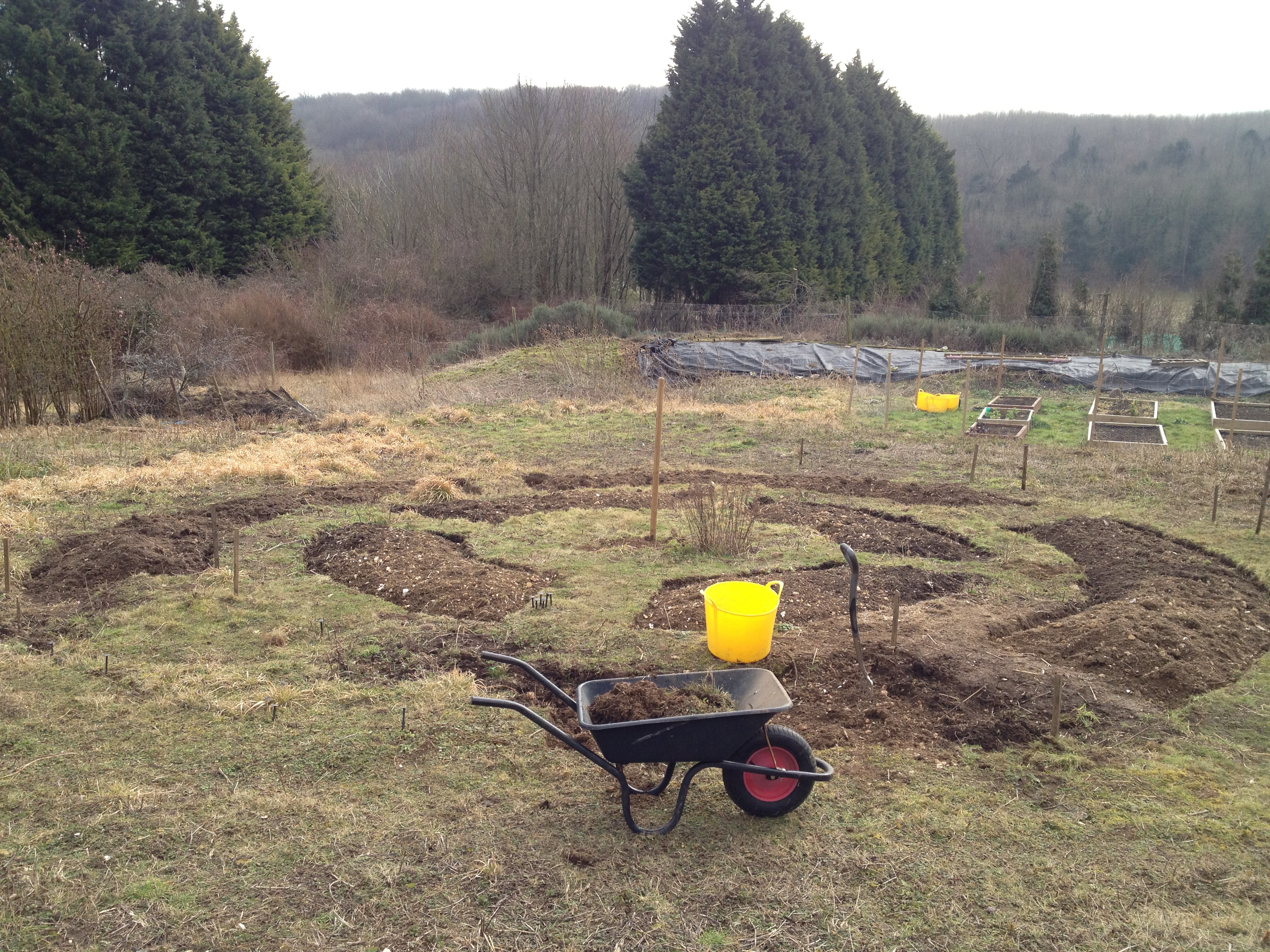
In January 2012 we began by relocating 6 little inherited heritage apple trees to the new orchard area and started digging our medicinal herb circular garden on the main, gently sloping, south facing bank.

The ground was very uneven and still covered with weeds and quite a lot of couch grass but slowly it began to take shape.
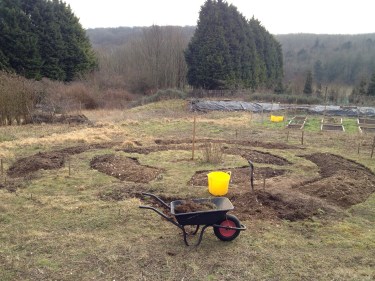
a few more beds to go
a few more beds to go

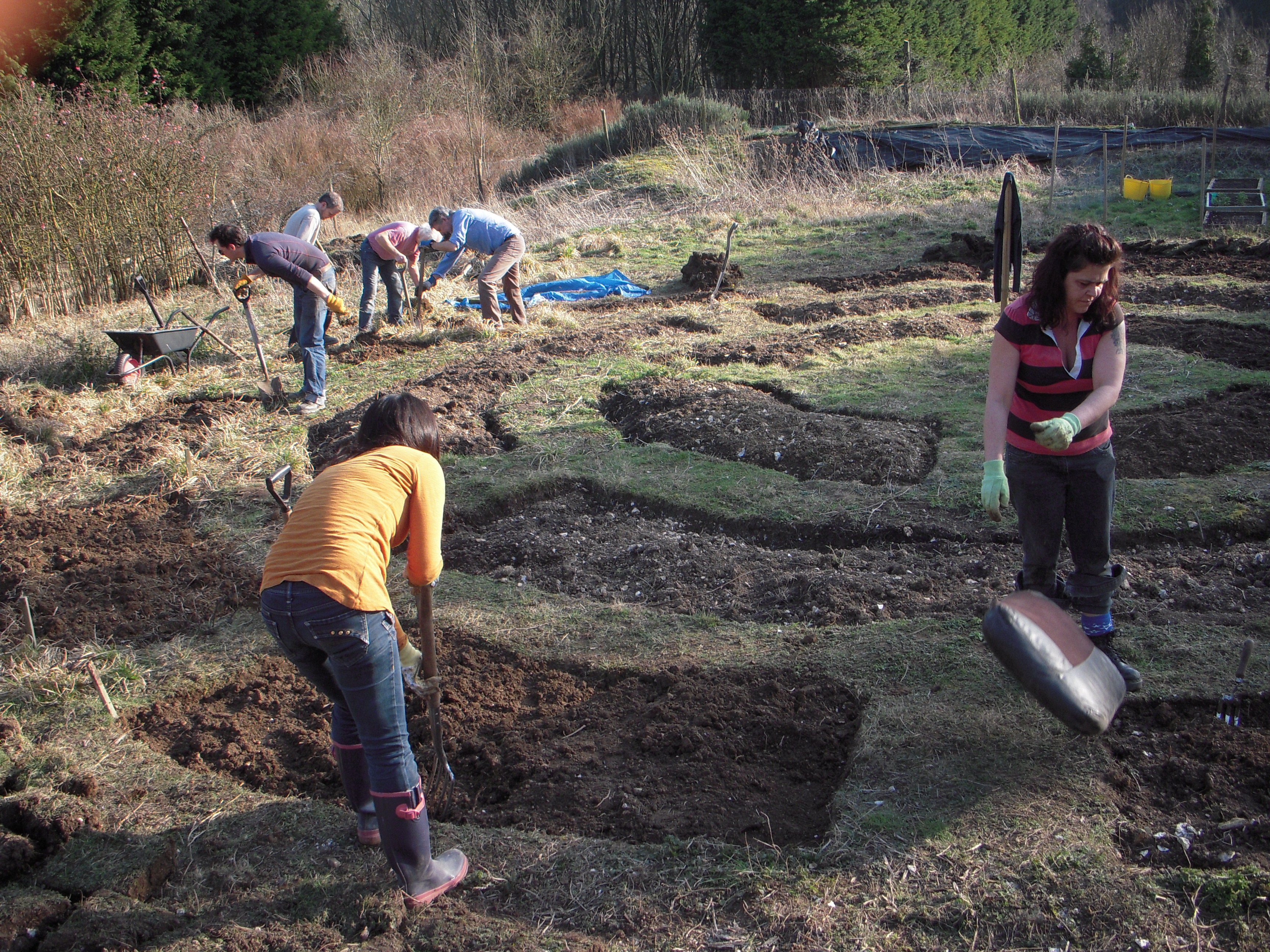
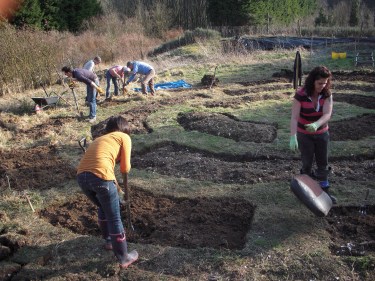
volunteer day

volunteer day


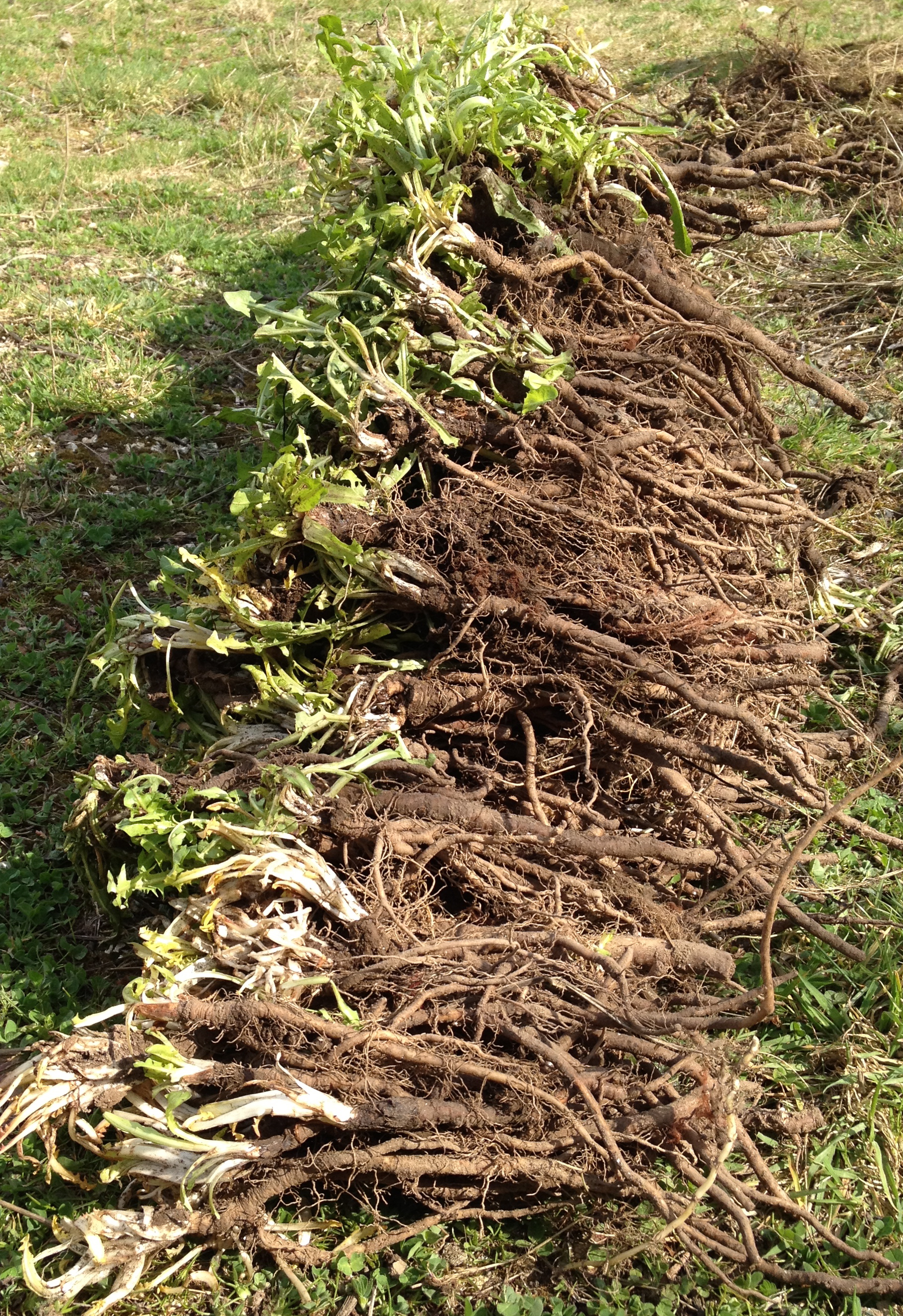
We are forging friendships with the neighbouring projects, who are all part of the umbrella organisation, Stanmer Organics and during the spring we took delivery of many an unwanted barrow of “weeds” dug up from their sites.  Everyone was becoming aware that the herbalist loved what they wanted rid of.
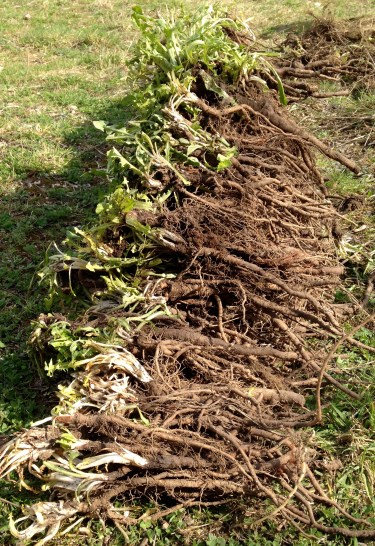
donated dandelions

donated dandelions


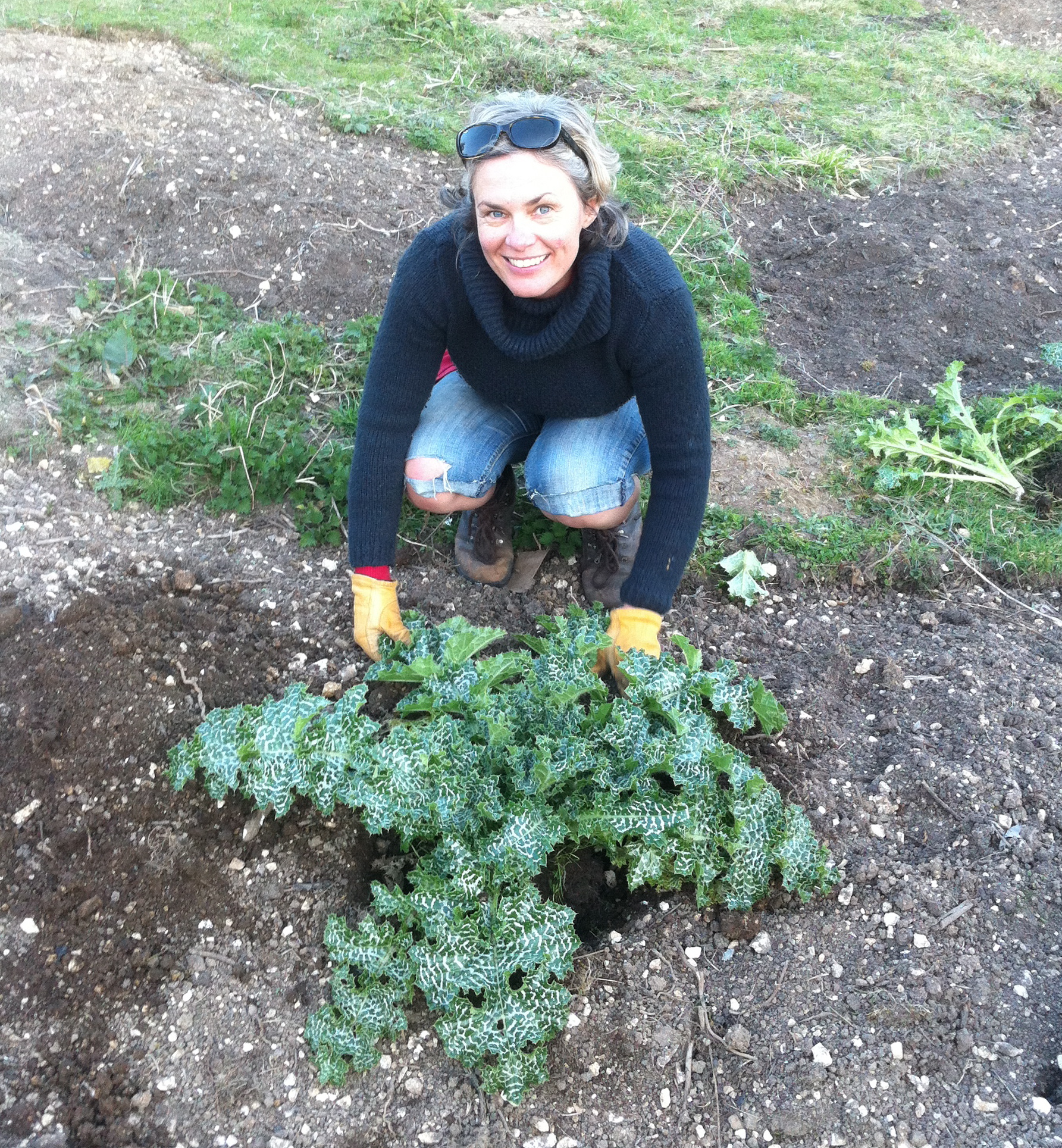
By spring the new garden was prepared and we took possession of our first medicinal herb to plant in the bed allocated to liver herbs, a lovely Milk thistle, donated by ‘Fork n digit” the community food growers down the track!
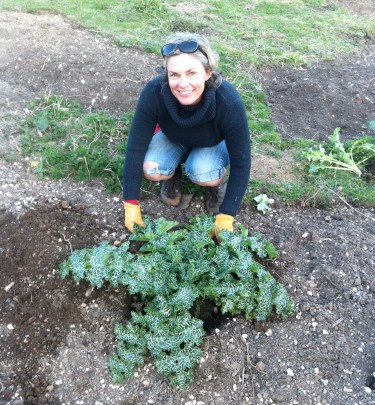
first planting..milk thistle

first planting..milk thistle

With organically certified seeds, donated plants from our certified organic site and with a jaunt across country to Jekka’s Herb Farm we began populating the garden with glorious medicinal plants.

We have also negotiated permission from the Soil Association to import some, non-certified organic plants when the organic alternative is not available on the national database, under what’s called a derogation order. This means that in 2 year’s time those plants will be naturalised organic too.

During the summer we also dug a pond in what was a natural dip in the land, which to our delight, has become alive with wildlife as it beds in to the landscape and we cleared an area of bramble to reveal the perfect camping spot complete with new fire pit (the dingly dell).
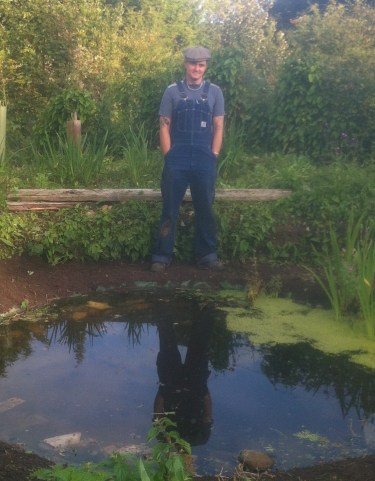
new pond
new pond